
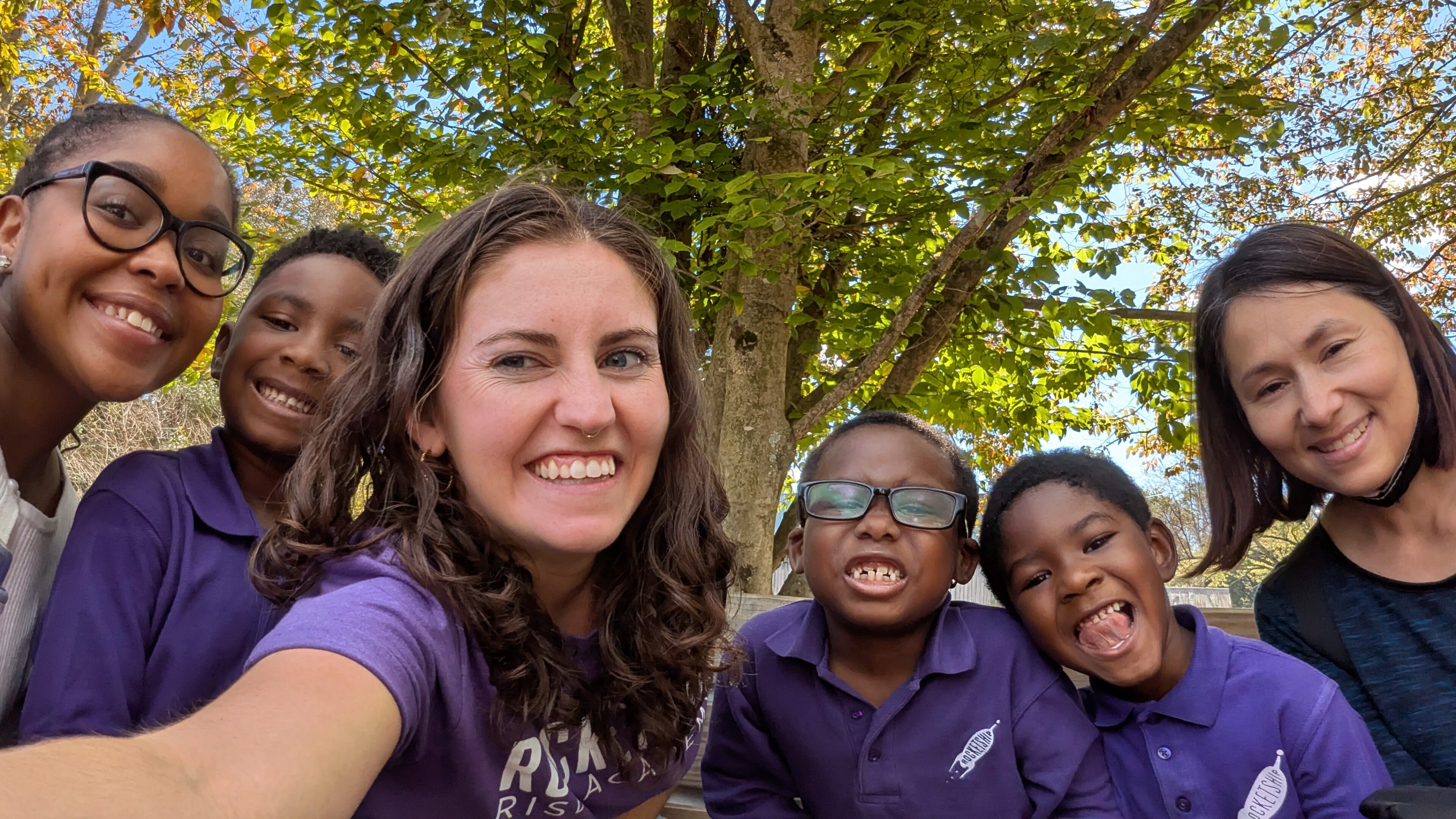
The Architecture of Trust
There’s a moment Margot Nitschke describes that captures something most teachers spend years working toward. A parent, on a weekend, sends a photo. No reason. Just their daughter mid-play, Barbie dolls scattered across the floor, living her five-year-old life. The message underneath is casual, cheerful — the kind of text you’d send a friend.
It’s a small thing. It’s also everything.

Margot Nitschke
That kind of ease doesn’t arrive on its own. Ms. Nitschke, a kindergarten teacher at Rocketship Rise in Washington, DC, has spent years building the conditions that make it possible. What she’s learned is that trust isn’t a feeling you wait for; it’s a structure you build, week by week, from the very first days of school.
Laying the Foundation

By the end of every week in the fall, each family in Ms. Nitschke’s class has received two things: a photo of their child smiling at school and a personal phone call.
Before families can be partners, they need to feel seen. So Ms. Nitschke starts early and stays consistent.
By the end of every week in the fall, each family has received two things: a photo of their child smiling at school and a personal phone call. Not a form letter. A real moment of connection that says: I see your kid, and I want you to know it. Newsletters go out on a steady schedule, pre-drafted and queued in advance. Every Wednesday, she posts students at work. At least once a week, something purely joyful. The content varies; the rhythm doesn’t.
Ms. Nitschke is also clear-eyed about something beyond logistics. As a white teacher at a school where most students are Black, she understands that trust can’t be assumed; it has to be earned, and earning it takes more than good intentions. That awareness runs through everything she does.
It Takes a Village
Families come in more shapes than a school roster can capture. The person who drops a child off on a Tuesday might be a grandmother, a favorite uncle, a neighbor who stepped in this week. Whoever it is, Ms. Nitschke introduces herself, says something genuine about the child, and makes sure they leave with her number.
Her phone policy is the same for everyone: call anytime. And mostly, families don’t abuse it. What they do, instead, is start to believe she means it — which matters most when something goes wrong. Ms. Nitschke recalls a parent who called worried that her quiet son was having accidents at school because he was too shy to raise his hand. Ms. Nitschke and the mom worked out a tailored solution, together. The relief in a parent’s voice when they feel genuinely heard; that, too, is its own form of trust-building.
Turning Milestones Into Moments

This fall, Ms. Nitschke organized three math fluency challenges that promoted at-home reinforcement of classroom concepts.
Ms. Nitschke thinks about family engagement not as a single channel but as a spectrum. Some caregivers are at the table every night, hungry for every strategy she can share. Others are working multiple jobs and doing everything they can just to get their child to school fed and rested. Both are showing up for their kids; both deserve to feel it.
So she designs for the whole range. This past fall, she organized three Fluency Challenges — math skills with deadlines tied to school celebrations — framed less like assessments and more like campaigns. She built anticipation, shared progress, and spotlighted families who sent in photos of their child practicing at home. Students who reached their goal were celebrated at launch, parent beside them, certificate in hand.
A Team Approach
No teacher, however intentional, builds a school community alone. One of Ms. Nitschke’s colleagues has been at Rocketship for nearly eight years; the relationships he carries with families are the kind that only time can build. Another runs aftercare, walking students out to their families each evening with specific, personal updates. Together, the kindergarten team operates from a shared group chat that hums with the ordinary business of caring for a community: a tutoring question, a rough week flagged, something noticed at pickup that the others should know.
An Invitation, Not an Announcement
When Ms. Nitschke reflects on what she’d tell a teacher just starting out, she returns to a simple truth: the invitation to engage has to come from the educator first. Families who have navigated indifferent institutions rarely assume the door is open; the teacher’s job is to open it — clearly, warmly, and more than once.
What she’s learned, underneath all of it, is that the most meaningful partnerships aren’t engineered; they grow out of a hundred small moments of honesty and care. Until one Saturday, out of nowhere, a parent sends you a photo of her daughter playing at home, just because she wanted you to see.

Published on May 15, 2026
Read more stories about: Parent Leadership, Teacher Experience, Uncategorized.

 English
  Español de México
  Tiếng Việt