

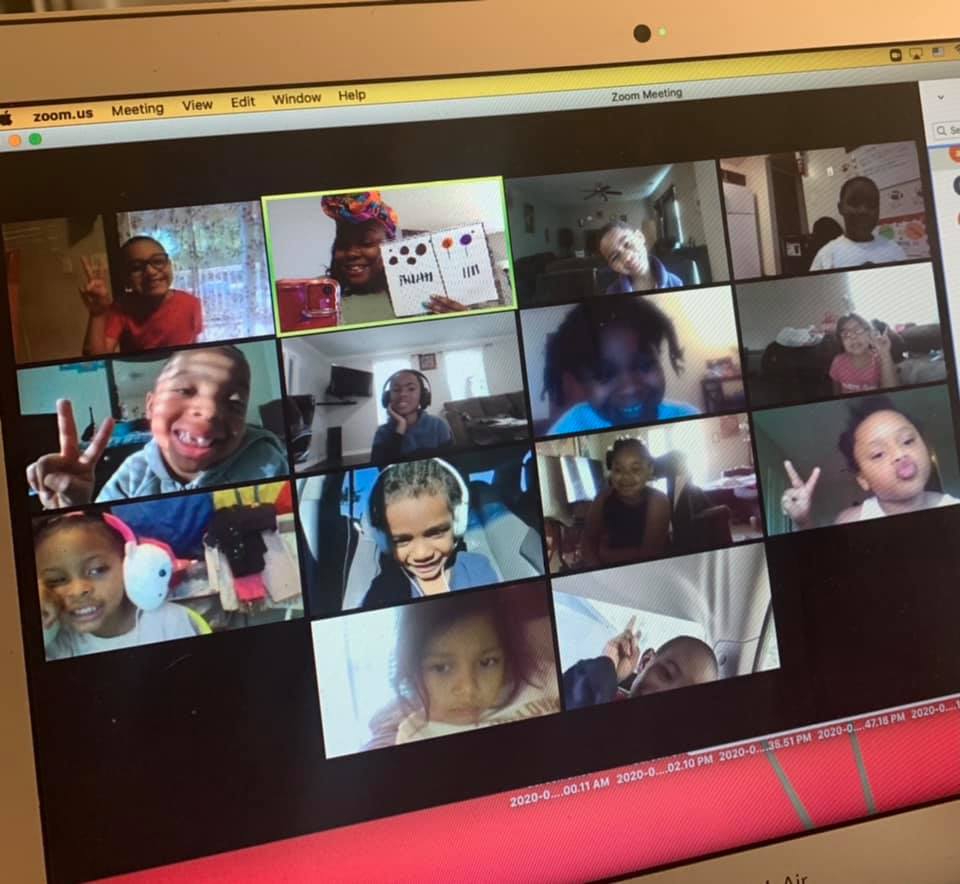
5 Tips for Engaging ALL Students Virtually
James Cross, 4th Grade Teacher, Rocketship Nashville Northeast Elementary
What does an engaged classroom look like? Do images of happy students raising their hand, sharing ideas, collaborating with peers, and completing assignments that challenge their learning come to mind? Now take a moment to think about what engagement looks like in a virtual classroom. Do your expectations for engagement change?
Teachers have always been experts at judging their students’ level of engagement when it comes to their work. If students aren’t “getting it,” we adjust. If students need more practice, we give it to them. If students are mastering the lesson, we challenge them to further explore their understanding. We plan activities where our students can apply their learning and demonstrate their understanding. Virtual learning, however, calls into question our ability to hold student engagement. We don’t always know what is going on behind the 2”x1” camera we see. This means that we now, more than ever, have to be intentional about how we engage our students.
Let’s take a look at 5 ways teachers are building engagement with their learners!
Tip #1: Leverage what you already have!
Virtual learning doesn’t mean you have to reinvent the wheel. Your school or district is likely using a virtual teaching program or software that comes with lots of engaging features. Start small, make sure the cameras are on! This helps everyone feel part of a school community. Teach your students how to mute and unmute. Is there a chat feature? A chat box is great for students to share their thoughts and engage with each other. Does your program have breakout rooms? We know that students learn better in smaller groups. Put a breakout room to work so students can talk and share freely with each other. You, as the teacher, can then circulate through breakout rooms to check in like you normally would. Check for additional features too, such as polls, reactions, and virtual hand-raising.
Tip #2: Simon Says this one is great!
Now that you have introduced those tech features, students need a chance to practice using them. Play a quick game of Simon Says to practice using the mute button, chatbox, and camera feature. Take a few notes of students who might need a little more help so you can check in with them later. If you find your students are still struggling to use these features, play another round to refresh their minds. Be intentional- if you notice a student who has it down, let them lead a round. Finally, make sure you are having fun too! Kids naturally feed off their teachers and if you are having fun playing a round of Simon Says so will they! Watch this example for inspiration!
Tip #3: Turn and talk with who you have at home!
Countless educators live by the 10:2 rule. For every ten minutes of teacher talk, it’s time to let our students have at least 2 minutes to share. As elementary teachers, we might aim for even more student talk time. Our goal might be 5:1. While students can’t easily talk to each other in a virtual class, they can still share at home. Have your students grab their favorite stuffed animal to share their thoughts with. If you have ever tried the tattling teddy, you know this will work!
Give your students a moment to collect their thoughts and then instruct them to share with their favorite stuffed toy. When students are done, call on a few to share what they told Mr. Teddy or Mrs. Bear. If stuffed animals aren’t their thing, try going back to those breakout rooms. Put them in groups of two or three and let them share. Students want to talk- so let’s get creative!
Tip #4: We love virtual teaching, yes we do, we love virtual teaching, how about you?
Chants, rhymes, and cheers have always been integral to student learning. We use them for the alphabet, letter sounds, math facts, reading skills, and just about everything. Chants help make what we learn sticky so we don’t forget it. I know that I will never forget that “eight times eight fell on the floor, picked it up, it was 64!” Chants and cheers are still effective strategies for online learning. Let your students all come off mute at the same time (it’s not as scary as it sounds!). Have your kids practice together. Chants and cheers will build unison and give your students an important method of remembering important facts. Here’s an example of one way chants help applaud a student’s answer.
Tip #5: Make learning a hoot with Kahoot!
You might already be finding some great online resources to use in your classroom. Maybe you use PearDeck, an online whiteboard, or online flashcards? One of our favorite tools is Kahoot. Kahoot lets you create questions and students get to answer them in real-time. They compete against each other to be the points leader. Besides getting to choose their own name, the best part is students are engaged because it feels like a game. Use Kahoot on a Friday to test their knowledge from the week. Reinforce a spelling pattern with questions that test their spelling mastery. Challenge their vocabulary skills by creating a vocabulary game. It’s really up to you with the content you want to create, but we guarantee students will love to play! Another great way to spark engagement and reinforce positive behaviors is by giving students Dojo Points. Watch the below video to learn more.
Student engagement is going to be tricky. It is going to be up and down. It’s also going to be what we make of it. Start small and get to know your students. Engagement always starts with knowing our students as learners and as people. Once we know our students, we can utilize numerous engagement strategies to bring out their joy for learning.
We can’t wait to hear how you are using these tips in your classroom! If you’re looking for a more research-based perspective on how to boost the quality of instruction while remote, then check out this insight report from The Learning Accelerator. You can also explore our Spark Engagement page for more tips to bring into your classroom tomorrow.
Published on septiembre 5, 2020
Lea más historias sobre: Sin categoría.
En el aula

3 Ways to Build Strong Parent-Teacher Connections
By Jeremiah Davis & Mrs. Aqeel, Rocketship Dream Community Prep | May 15, 2025
Ready to level up your relationships with your families this school year? Listen in for tips from an experienced teacher known for building strong bonds with parents!
Leer más ⟩
Cómo fomentar una mentalidad de crecimiento en el aula
| 10 de abril de 2025
Aprenda a cultivar la reflexión, aceptar los retos y fomentar la perseverancia en usted mismo y en sus alumnos.
Leer más ⟩
Cómo mejorar la cultura escolar
Jeremiah Davis, Paraprofesional, Rocketship Dream Community Prep | 3 de marzo de 2025
¿Listo para elevar la moral en tu colegio? Incorpore estas nueve celebraciones a su curso escolar.
Leer más ⟩
Cómo el coaching en las escuelas mejora los resultados
Escuelas Públicas de Rockesthip | Feb 4, 2025
Descubra cómo el coaching en directo y las sesiones semanales de feedback pueden ayudar a sus profesores a sentirse más respaldados durante todo el año.
Leer más ⟩
Conferencia de padres: consejos para profesores noveles
Jeremiah Davis, Paraprofesional, Rocketship Dream Community Prep | 6 de enero de 2025
¿Busca consejos para la conferencia de padres? Prepárese con los consejos de nuestros educadores.
Leer más ⟩
¿Primer año como profesor? Aquí tienes cinco errores que debes evitar.
Jeremiah Davis, Paraprofesional, Rocketship Dream Community Prep | 1 de noviembre de 2024
Descubre qué errores comete la mayoría de los profesores primerizos y cómo puedes salir adelante este curso escolar con algunos sencillos consejos de un colega educador.
Leer más ⟩
3 sistemas de aula por los que juran los nuevos profesores
Escuelas Públicas Rocketship | 30 de septiembre de 2024
Como profesor primerizo, establecer un entorno de clase fluido y productivo puede resultar un poco abrumador. Por suerte, estas sencillas estrategias pueden ayudar mucho.
Leer más ⟩
Cómo la colaboración entre profesores puede beneficiar a su clase
Presentación de Alejandra Chávez, especialista en educación de la escuela primaria Rocketship Mosaic | 10 de junio de 2024
Escuche a la Sra. Aly hablar de cómo un pequeño equipo de educadores puede marcar una gran diferencia en los resultados de los estudiantes mediante una planificación cuidadosa, una colaboración centrada y adaptaciones personalizadas. La Sra. Aly fue una de nuestras educadoras con mejores resultados en California en el curso 23-24.
Leer más ⟩
Apoyo a los padres de alumnos multilingües en las reuniones familia-profesor
Emma Volpe, Academia Rocketship United | 1 de junio de 2022
Obtenga reflexiones sobre cómo crear un entorno más integrador para las reuniones entre familias y profesores.
Leer más ⟩
5 maneras de fortalecer las relaciones en el aula
James Cross, Subdirector, Rocketship Nashville Northeast Elementary | 20 de febrero de 2022
La nueva era de la educación exige un nuevo nivel de conexión. Aquí tienes algunos consejos clave para fortalecer las relaciones en tu aula este curso escolar.
Leer más ⟩
5 formas en que los directores de centro pueden orientar y apoyar a los profesores
Eesir Kaur, Directora de Desarrollo Profesional | 15 de octubre de 2020
¿Es usted el director de un centro de enseñanza y quiere formar a sus profesores de forma más eficaz? Esto es lo que nos funciona a nosotros.
Leer más ⟩
 Español de México
  English
  Tiếng Việt