

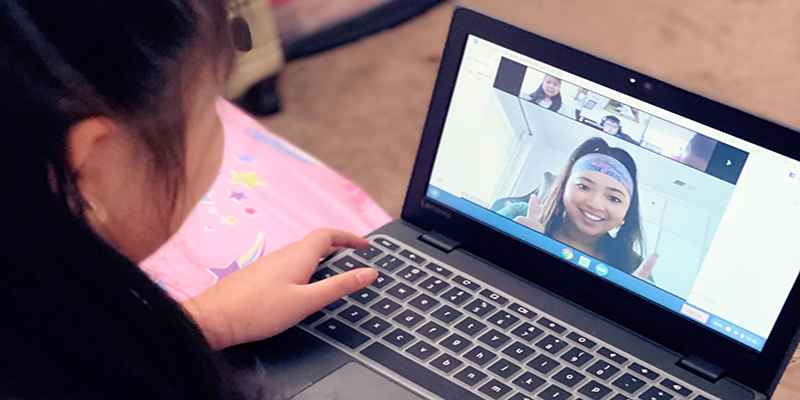
8 Ways Educators Can Excel During Distance Learning
Jordan Blanton, Associate Director of Humanities
Like many, our Rocketship teachers greatly miss connecting with students in person. But as the coronavirus pandemic continues, so do our tireless efforts to offer engaging, high-quality education virtually.
Ask any educator you know, and you’ll likely hear teaching virtually is no easy feat. Thankfully, our school leaders and teachers pivoted quickly, and collaboratively came up with fresh ideas to make distance learning a dynamic experience. Here, teachers hold students accountable while boosting engagement, facilitating growth, and offering 1:1 check-ins.
However, many teachers, especially those new to the role, are seeking tips during this time. So to support the wider education community, we compiled these eight ways educators can help students thrive while learning from home.
1. Kick-off your meeting early with a friendly competition.
Let students know that if they log in to your video meetings 10 minutes before the start time, there will be some friendly competition. Use Quizlet or Kahoot to get their brains warmed up and ready to go. When you start on a high note, your lesson will begin on time and with high attendance.
2. Set clear and consistent expectations.
Invest students in virtual meeting “norms” by co-creating the agreements together. For starters, it’s helpful to be clear on what you want to see and hear students doing during your meetings. They should be in a well-lit room, out of bed, and dressed for success with their videos on, faces in the frame, and ready to engage. Once you establish those basics, ask them to generate ideas about what our actions and behaviors should be. Dig deeper by pushing them to think about why those actions are important. Start each lesson with the agreed-upon norms typically (3-5) and hold students accountable for upholding them. You might be delightfully surprised when they start to hold each other accountable too.
3. Launch every class with a celebration!
Reinforce the transferable strategies that students used by spotlighting student work when you launch your video meeting. Take a picture and include it in your slide deck to make the work and feedback visible. Visibility into excellent work will make the feedback concrete for students. Let yourself get creative with celebrations. Many of our teachers use TikTok to announce students who passed exams or spotlight those who’ve made great strides week over week.
4. Stamp the behavior you want students to repeat.
At Rocketship, we teach the “reader” and “writer” in our students, instead of teaching the actual “reading” and “writing” itself. This means that the skills and strategies found in our lesson plans can be “transferred” or applied to a variety of contexts. When students demonstrate transferable thinking, we make sure to let the entire class know. Doing so ensures that we are teaching to the future and building independence in our students.
For example, if a student analyzes a character in a fictional story, then the teacher will want to “stamp” this “transferable thinking” to ensure that all students continue to apply it to any future text within this genre. Therefore, the teacher might say something like, “Great fiction readers always pay attention to the characters in the story to understand the lesson more deeply. Did you notice how ______ student did a wonderful job paying close attention to the relationship between our characters in order to better understand the problem of the story? Make sure to keep doing that every time you read fictional stories! Doing so will help you unpack the lesson the author is trying to convey!”
By “stamping” the transferable thinking, students will be able to build strong reading and writing habits that extend to any text they encounter or write in the future.
5. Give individual feedback.
Let students know that their independent work matters and it’s not just to keep them busy at home. Using platforms like Seesaw and Google Classroom will allow you to easily review work and leave comments. These individual touchpoints go beyond accountability and are essential to reinforce skills. This practice sends the message to students that you care enough about them to analyze their work. Plus, there is an added bonus of gathering trends, so you can address misconceptions the following day.
6. Hold time for 1:1 connections.
Setting up a consistent time to call or “Zoom” with your students is a great way to keep students engaged and connected. At Rocketship, students meet with their Humanities and STEM teachers at least once per week. Some students engage with a teacher a least once a day in a small group or individual setting. These calls start with care by asking about a student’s general well-being. Then, they segway into coaching opportunities to help students with their academic tasks. For English learners, this is an opportunity to explicitly teach language, so that students can fully access the content. As a result, students know that you care about them as a person, value the work they are creating, and want to see them be successful.
7. Engage parents often.
Consistent teacher-parent communication is incredibly important during distance learning. Keep parents in the loop on what their child’s weekly learning goals are to hold students accountable. Teachers can utilize communication features in Seesaw, the multilingual Talking Points app, or texting to keep parents informed on their child’s progress and struggles.
8. Schedule time for self-care during and after the school day.
As educators who deeply care about our students, it’s easy to put off personal care. Yet, as distance learning stretches on, it’s critical to carve out time to decompress and take care of you. Make sure you’re taking small screen breaks throughout the day to reset and a full lunch break. Set recurring reminders on your calendar to end the workday and spend time doing things that fulfill you or connect with family. After all, in order to expect the best of our students we have to show up each day mentally replenished, as well.
While our educators have learned many lessons and codified best practices from the spring 2020 distance learning experience, we’re always looking to improve the experience for students, families, and teachers and will continue to share helpful insight as the school year progresses. Here’s to another year of unleashing potential together!
Published on Tháng tám 24, 2020
Đọc thêm các câu chuyện về: Chưa phân loại.
Trong lớp học

3 Ways to Build Strong Parent-Teacher Connections
By Jeremiah Davis & Mrs. Aqeel, Rocketship Dream Community Prep | May 15, 2025
Ready to level up your relationships with your families this school year? Listen in for tips from an experienced teacher known for building strong bonds with parents!
Đọc thêm ⟩
Làm thế nào để nuôi dưỡng tư duy phát triển trong lớp học
| Ngày 10 tháng 4 năm 2025
Học cách nuôi dưỡng sự phản chiếu, đón nhận thử thách và thúc đẩy tính kiên trì ở bản thân bạn và học sinh của bạn.
Đọc thêm ⟩
Làm thế nào để cải thiện văn hóa trường học
Jeremiah Davis, Trợ lý chuyên môn, Rocketship Dream Community Prep | Ngày 3 tháng 3 năm 2025
Sẵn sàng nâng cao tinh thần ở trường của bạn? Hãy lồng ghép chín lễ kỷ niệm này vào năm học của bạn!
Đọc thêm ⟩
Làm thế nào để huấn luyện trong trường học cải thiện kết quả
Trường công lập Rockesthip | Ngày 4 tháng 2 năm 2025
Tìm hiểu cách huấn luyện trực tiếp và các buổi phản hồi hàng tuần có thể giúp giáo viên của bạn cảm thấy được hỗ trợ nhiều hơn trong suốt cả năm!
Đọc thêm ⟩
Lời khuyên cho giáo viên năm nhất về hội nghị phụ huynh
Jeremiah Davis, Trợ lý chuyên môn, Rocketship Dream Community Prep | Ngày 6 tháng 1 năm 2025
Bạn đang tìm kiếm mẹo hay nhất cho hội nghị phụ huynh? Hãy chuẩn bị với lời khuyên từ các nhà giáo dục của chúng tôi.
Đọc thêm ⟩
Giáo viên năm nhất? Dưới đây là năm lỗi cần tránh.
Jeremiah Davis, Trợ lý chuyên môn, Rocketship Dream Community Prep | Ngày 1 tháng 11 năm 2024
Xem những sai lầm mà hầu hết giáo viên năm nhất mắc phải và cách bạn có thể tiến bộ trong năm học này với một số mẹo đơn giản từ một đồng nghiệp giáo viên.
Đọc thêm ⟩
3 Hệ thống lớp học mà giáo viên mới thề sẽ tuân thủ
Trường công Rocketship | Ngày 30 tháng 9 năm 2024
Với tư cách là một giáo viên năm nhất, việc thiết lập một môi trường lớp học suôn sẻ và hiệu quả có thể khiến bạn cảm thấy hơi choáng ngợp. May mắn thay, những chiến lược đơn giản này có thể giúp ích rất nhiều.
Đọc thêm ⟩
Sự cộng tác giữa các giáo viên có thể mang lại lợi ích gì cho lớp học của bạn
Có sự góp mặt của Alejandra Chavez, Chuyên gia giáo dục tại Trường tiểu học Rocketship Mosaic | Ngày 10 tháng 6 năm 2024
Hãy lắng nghe cô Aly chia sẻ về cách một nhóm giáo viên nhỏ có thể tạo nên sự khác biệt lớn trong kết quả học tập của học sinh thông qua việc lập kế hoạch chu đáo, hợp tác tập trung và các điều chỉnh được cá nhân hóa. Cô Aly là một trong những giáo viên có thành tích cao nhất của chúng tôi tại California trong năm học 23-24.
Đọc thêm ⟩
Hỗ trợ phụ huynh của học sinh đa ngôn ngữ trong các cuộc họp gia đình/giáo viên
Emma Volpe, Học viện Rocketship United | Ngày 1 tháng 6 năm 2022
Nhận được thông tin chi tiết sâu sắc về cách tạo ra môi trường hội nghị gia đình - giáo viên toàn diện hơn.
Đọc thêm ⟩
5 cách để củng cố mối quan hệ trong lớp học
James Cross, Trợ lý Hiệu trưởng, Trường Tiểu học Rocketship Nashville Northeast | Ngày 20 tháng 2 năm 2022
Kỷ nguyên giáo dục mới đòi hỏi một cấp độ kết nối mới. Sau đây là một số mẹo chính để củng cố mối quan hệ trong lớp học của bạn trong năm học này.
Đọc thêm ⟩
5 cách lãnh đạo nhà trường có thể hướng dẫn và hỗ trợ giáo viên
Eesir Kaur, Giám đốc Phát triển Chuyên môn | Ngày 15 tháng 10 năm 2020
Bạn có phải là một nhà lãnh đạo trường học đang muốn hướng dẫn giáo viên của mình hiệu quả hơn không? Sau đây là những gì hiệu quả với chúng tôi.
Đọc thêm ⟩
 Tiếng Việt
  English
  Español de México