

5 Challenges Pre-K Teachers Face in Virtually Teaching & Solutions to Help
By Tenea Harris-Nance, Pre-K Teacher at AppleTree at Rocketship Legacy Prep
When we decided to become Pre-K teachers, we never imagined it would be contingent on a strong internet connection and parents being the teacher’s primary support. Since schools closed in March of 2020, like many other Pre-K teachers, I have had to rethink my whole teaching process to ensure I am providing my students with the best pre-school experience I can provide for them virtually. Through trial and error, I have learned that I already have the tools needed to ensure I am successful in navigating this virtual teaching; I just needed to figure out a way that translates through a computer screen versus in-person.
We know we’re not alone in these struggles, so we wanted to share some of the key challenges we’ve faced as Pre-K teachers this past year and some solutions that may help you in your virtual classroom.
Challenge #1: How to increase student engagement virtually for pre-k students
Keeping students engaged virtually can seem like an impossible task, but I have learned to adapt what I have done for in-person learning to keep students engaged virtually. Visuals are key. The same way you create a warm, inviting classroom when teaching in-person, it is even more important to do so while teaching virtually.
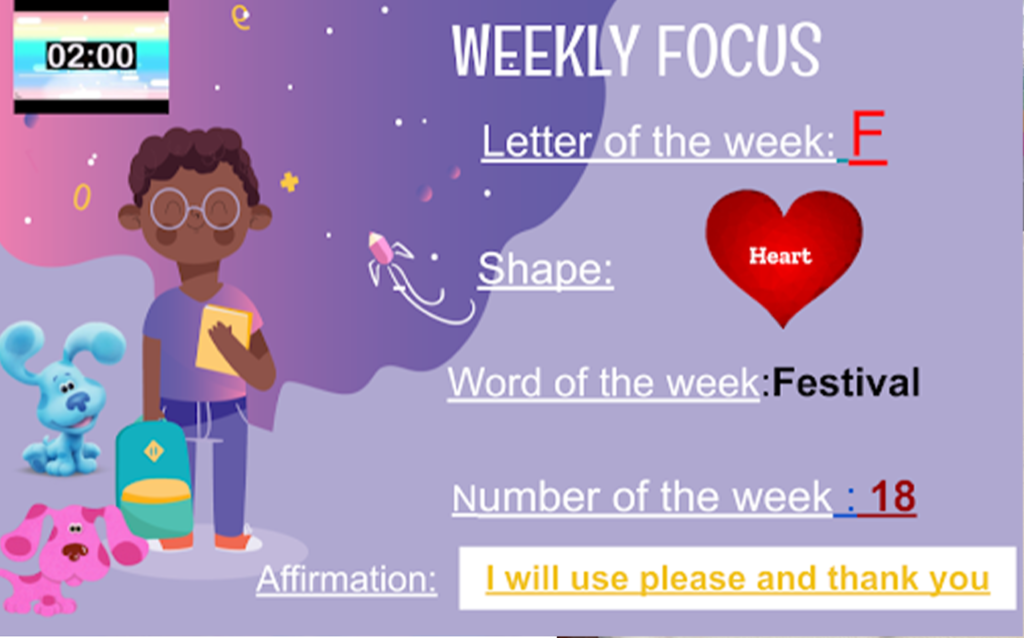
-We use Google Slides to guide our lessons and have developed a format that includes a classroom chant, morning song, and the vocabulary of the day for starters.
-Our powerpoints are colorful and fun, which grabs our student’s attention as soon as they get on. We use pictures, videos, and we incorporate sign language as well, which has been a huge success with our students.
-Movement breaks are another great way to keep students engaged. Developmentally we know that pre-k students’ attention span is between 15-20 minutes. Giving students these breaks allows them to have a 2-3 minute recharge to stay engaged.
-Lastly, incorporating what your students like into your lesson is an easy way to engage them. For example, we incorporate all of our student’s favorite cartoon characters or favorite superheroes in our powerpoints whenever we can. My biggest tip is not to be afraid to try new things to see what works, and if it doesn’t work, try to switch it up, think outside the box, and be creative.
Challenge #2: How to maximize student participation virtually
When the school year first started, we struggled with getting our students to attend our live lessons, and to be honest, we still continuously do. So, what’s helped us increase participation?
-We have found that having multiple ways to get the lesson content each day can be a huge help. We utilize Class Dojo to post activities that students can complete that are aligned with our live meetings. This allows those students who could not attend to watch the pre-recorded lessons and then show knowledge of what they have learned.
-The students who have perfect attendance get a shoutout weekly on our Class Dojo story.
-When we do the shoutouts, we also include snapshots of what we did in the lesson for the other students to see how much fun we are having while learning together and also to get them excited about joining us next time.
Challenge #3:Teaching pre-k students how to navigate technology
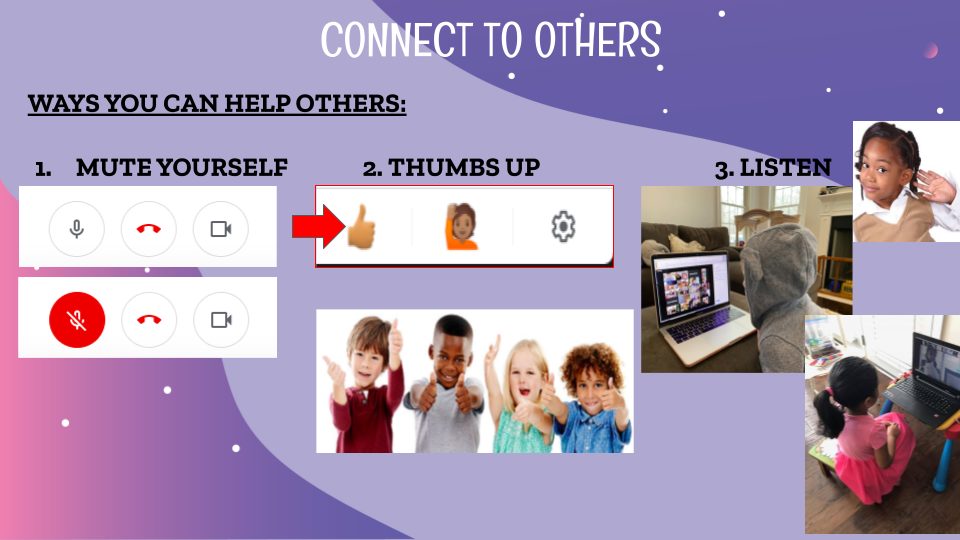
Let’s be honest; it can be a struggle to navigate our live lessons while still keeping students engaged. One big challenge was that our students were not familiar with how to mute and unmute themselves.
-Some of our students come to our live meetings without an adult or anyone in the room to help them when they’re called on to answer questions.
-We taught them sign language for help and be another resource they can use to answer questions or get our attention. When teaching your students how to navigate the platform, you are using its features, make it fun. We turned our lesson into a competition to see who gets to navigate the features we taught them, and our students love it. Teaching students how to navigate through their technology really helped make our live meetings run smoothly.
Challenge #4: How to address students speaking out of turn
Are you having a hard time managing students from calling out of turn? So were we. But once we taught our students the mute and unmute button, they were now freely unmuting themselves whenever they wanted. This became distracting for the other students and ultimately became a struggle for us to teach.
-We decided that we should bring the equity sticks to the virtual classroom to help manage students speaking out of turn. This new but old technique has helped our students to respect when others are speaking and not call out when it’s not their turn. Although we utilize the equity sticks, we also have a slide that is dedicated to the virtual classroom rules. One of the rules is that students stay on mute until they’re told it’s their turn.
-We decided that we should bring the equity sticks to the virtual classroom to help manage students speaking out of turn. This new but old technique has helped our students respect when others are speaking and not call out if it was not their turn. Although we utilize the equity sticks, we also have a slide dedicated to the virtual classroom rules, and staying on mute until told is one of them. The equity sticks are only one piece of a two-part solution. If you only couple them with having your virtual classroom rules and expectations, you will definitely get closer to the desired outcome you are looking for.
Challenge #5: Access to materials limits students’ learning opportunities
When we went virtual, we steered away from activities that we would normally do if we were in-person because we were scared that students wouldn’t be able to participate due to lack of materials. Although our school gives out unit supplies, we found that many of our students still did not have access to those materials like paint or pencils.
-When access to materials was an issue, we provided students with alternative ways to complete the assignments or activities.
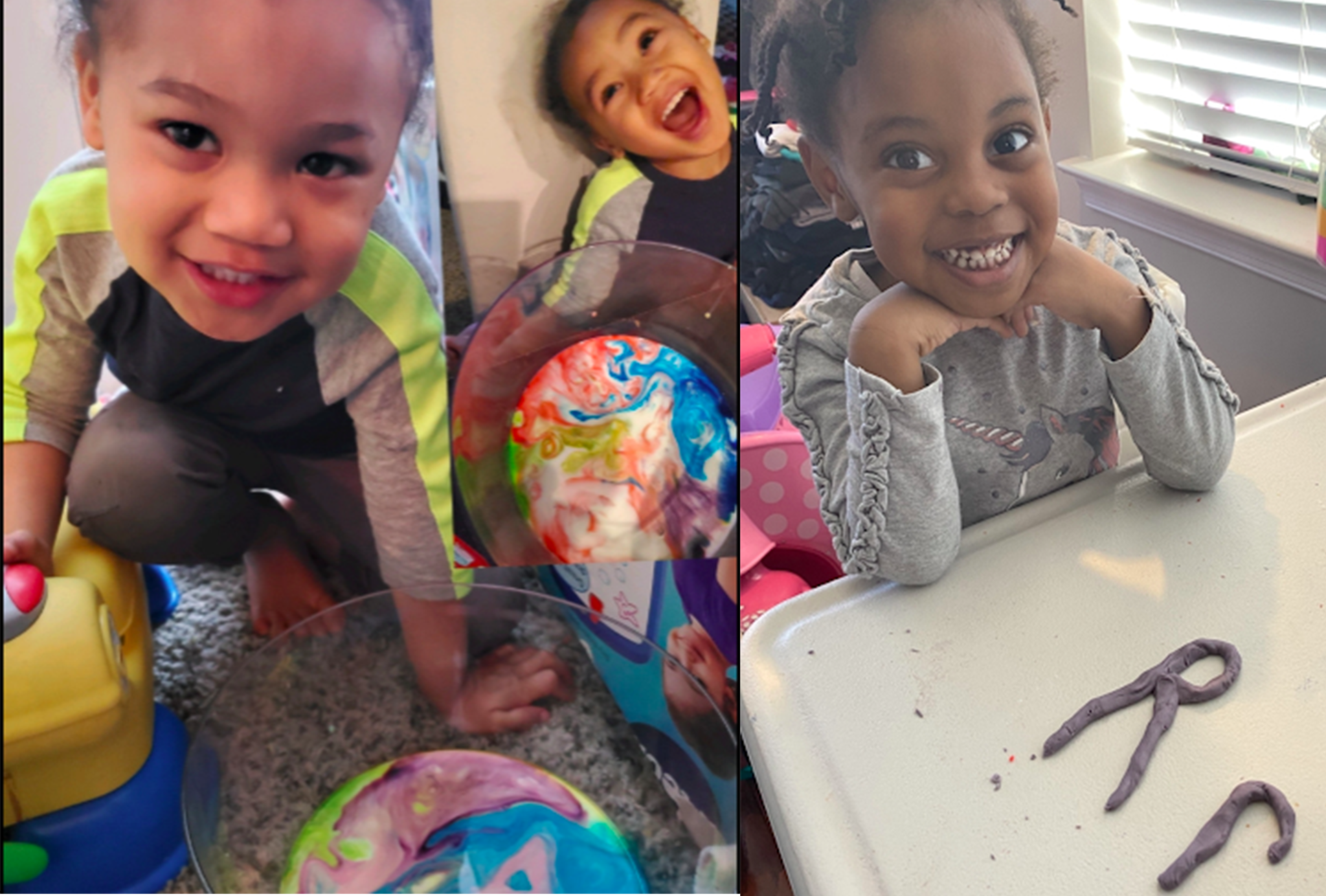
-When we planned the activities, we went through the suggested list and decided what household items or items we thought could be used as an easy substitute. For example, if we were painting, we would also let them use crayons or markers if they didn’t have paint. If they were practicing writing, we let them use other materials such as shaving cream, dry erase markers, and dry erase board.
-When planning interactive activities such as counting, the students may need counters to try to find activities where students can still get the learning objective out of it with substituted materials. This was a big deal for us because we could provide students with a hands-on learning experience virtually, even if they didn’t have the exact materials suggested.
 Greetings! My name is Tenea Harris-Nance. I am a native Washingtonian and obtained my B.A. in Communications in 2008 from Trinity University and my Masters in Educational Administration with a concentration in early childhood in May 2020. This is my eighth school year at AppleTree and my 3rd year at the Rocketship Legacy Prep campus. I have been a mentor teacher for over five years. I love working with children and have been working with them for over ten years through various volunteer work, and other teaching opportunities. One of my favorite activities to do with my students is reading books! I am passionate about being a teacher because I receive great satisfaction in watching the growth of my students. I come from a family of teachers and love to teach and learn with my students.
Published on Tháng ba 5, 2021
Đọc thêm các câu chuyện về: Chưa phân loại.
Trong lớp học

3 Ways to Build Strong Parent-Teacher Connections
By Jeremiah Davis & Mrs. Aqeel, Rocketship Dream Community Prep | May 15, 2025
Ready to level up your relationships with your families this school year? Listen in for tips from an experienced teacher known for building strong bonds with parents!
Đọc thêm ⟩
Làm thế nào để nuôi dưỡng tư duy phát triển trong lớp học
| Ngày 10 tháng 4 năm 2025
Học cách nuôi dưỡng sự phản chiếu, đón nhận thử thách và thúc đẩy tính kiên trì ở bản thân bạn và học sinh của bạn.
Đọc thêm ⟩
Làm thế nào để cải thiện văn hóa trường học
Jeremiah Davis, Trợ lý chuyên môn, Rocketship Dream Community Prep | Ngày 3 tháng 3 năm 2025
Sẵn sàng nâng cao tinh thần ở trường của bạn? Hãy lồng ghép chín lễ kỷ niệm này vào năm học của bạn!
Đọc thêm ⟩
Làm thế nào để huấn luyện trong trường học cải thiện kết quả
Trường công lập Rockesthip | Ngày 4 tháng 2 năm 2025
Tìm hiểu cách huấn luyện trực tiếp và các buổi phản hồi hàng tuần có thể giúp giáo viên của bạn cảm thấy được hỗ trợ nhiều hơn trong suốt cả năm!
Đọc thêm ⟩
Lời khuyên cho giáo viên năm nhất về hội nghị phụ huynh
Jeremiah Davis, Trợ lý chuyên môn, Rocketship Dream Community Prep | Ngày 6 tháng 1 năm 2025
Bạn đang tìm kiếm mẹo hay nhất cho hội nghị phụ huynh? Hãy chuẩn bị với lời khuyên từ các nhà giáo dục của chúng tôi.
Đọc thêm ⟩
Giáo viên năm nhất? Dưới đây là năm lỗi cần tránh.
Jeremiah Davis, Trợ lý chuyên môn, Rocketship Dream Community Prep | Ngày 1 tháng 11 năm 2024
Xem những sai lầm mà hầu hết giáo viên năm nhất mắc phải và cách bạn có thể tiến bộ trong năm học này với một số mẹo đơn giản từ một đồng nghiệp giáo viên.
Đọc thêm ⟩
3 Hệ thống lớp học mà giáo viên mới thề sẽ tuân thủ
Trường công Rocketship | Ngày 30 tháng 9 năm 2024
Với tư cách là một giáo viên năm nhất, việc thiết lập một môi trường lớp học suôn sẻ và hiệu quả có thể khiến bạn cảm thấy hơi choáng ngợp. May mắn thay, những chiến lược đơn giản này có thể giúp ích rất nhiều.
Đọc thêm ⟩
Sự cộng tác giữa các giáo viên có thể mang lại lợi ích gì cho lớp học của bạn
Có sự góp mặt của Alejandra Chavez, Chuyên gia giáo dục tại Trường tiểu học Rocketship Mosaic | Ngày 10 tháng 6 năm 2024
Hãy lắng nghe cô Aly chia sẻ về cách một nhóm giáo viên nhỏ có thể tạo nên sự khác biệt lớn trong kết quả học tập của học sinh thông qua việc lập kế hoạch chu đáo, hợp tác tập trung và các điều chỉnh được cá nhân hóa. Cô Aly là một trong những giáo viên có thành tích cao nhất của chúng tôi tại California trong năm học 23-24.
Đọc thêm ⟩
Hỗ trợ phụ huynh của học sinh đa ngôn ngữ trong các cuộc họp gia đình/giáo viên
Emma Volpe, Học viện Rocketship United | Ngày 1 tháng 6 năm 2022
Nhận được thông tin chi tiết sâu sắc về cách tạo ra môi trường hội nghị gia đình - giáo viên toàn diện hơn.
Đọc thêm ⟩
5 cách để củng cố mối quan hệ trong lớp học
James Cross, Trợ lý Hiệu trưởng, Trường Tiểu học Rocketship Nashville Northeast | Ngày 20 tháng 2 năm 2022
Kỷ nguyên giáo dục mới đòi hỏi một cấp độ kết nối mới. Sau đây là một số mẹo chính để củng cố mối quan hệ trong lớp học của bạn trong năm học này.
Đọc thêm ⟩
5 cách lãnh đạo nhà trường có thể hướng dẫn và hỗ trợ giáo viên
Eesir Kaur, Giám đốc Phát triển Chuyên môn | Ngày 15 tháng 10 năm 2020
Bạn có phải là một nhà lãnh đạo trường học đang muốn hướng dẫn giáo viên của mình hiệu quả hơn không? Sau đây là những gì hiệu quả với chúng tôi.
Đọc thêm ⟩
 Tiếng Việt
  English
  Español de México