

3 Ways to Ease the Transition Between Virtual and In-Person Classrooms
By James Cross, 4th Grade Teacher, Rocketship Nashville Northeast Elementary
Halfway through the 20/21 school year and we have schools that are still virtual, schools that are hybrid, and schools that went back in-person. My school is still 100% virtual for this school year, but a few months ago we invited a small number of students from each grade for in-person tutoring. And to be honest, it was not a walk in the park.
On my first day of in-person tutoring, I had a few students who I have taught and a few students who were new to me. I felt like a first-year teacher all over again. I was cold, unsure, and everything I had ever learned as a teacher was out of sight, out of mind. The transition won that day and I knew I couldn’t let this be the narrative. To turn this transition into a success, I adjusted my attention to focus on a few key areas – my communication, taking things back to the basics, and an internal audit on myself.
Communicate Honestly and Communicate Often
I’ve received countless texts, calls, and emails from parents who are confused or just need more information this year. This isn’t a new phenomenon, but it has been extremely difficult to make sure that all parents get the information that they need. And, truthfully, the information we share this year isn’t always positive or reaffirming news. We do, however, have an obligation to make sure we are communicating often and truthfully.
Most schools are sending out letters, calling, or emailing to notify parents of new and updated decisions. In early December of 2020, the largest district in Nashville went from in-person back to virtual with very short notice. The decision was made to keep students and families safe. I saw articles in the news, I heard about the decision on the radio, and I saw posts on their social media. The district did a great job of getting the message out to families. The conversation, however, can’t end there.
This school year has been a test of our ability to invest in people. We can’t control how others feel about the transition, but we can extend our ears. Call your families. Make sure they know about the transition. Ask for their thoughts. Check-in with them and see how things are going. You might not be able to solve anything, but families deserve to know that we care about them and their voices are important. A quick check-in might be the best way to help them understand the decision and clear up any questions or fears. After you’ve talked to families, talk to your students. They deserve a space to process, as well. It’s ok to be reassuring, but be honest. School is different right now, we can’t pretend it’s not.
Practice Doesn’t Make Perfect, But It Helps
We’ve all heard the saying that practice makes perfect. Let’s be honest though, practice doesn’t make us perfect, but practice makes things feel routine. As teachers, we’re experts on routines. We have routines for walking, sharpening a pencil, asking for water. You name it and we’ve got a routine for it. This is no different when teaching virtual or in-person. Cling to your routines that have been working and practice ones that will inevitably change when making a transition.
The first month of school is not the only month we should be practicing routines. If your students are going back into the classroom, tell them the new procedures in advance. When the students arrive at the building, practice the new procedures. You aren’t wasting instructional time, you are ensuring safety. If you are heading back to virtual classrooms, pull out those engagement techniques you used to prepare students before.
Not only should you practice, but let your students own the practice. Our students are not blind to what is happening and many of them want to share what they know or what we should be doing. Ask them about how and when they wear masks. Let them lead a conversation on hand washing. If they aren’t getting it, jump in and move the conversation in the right direction, but open the floor. Once again, be honest. They are going to be curious about all the new procedures and why they have to practice. We always owe our students the truth.
Celebrate Hard
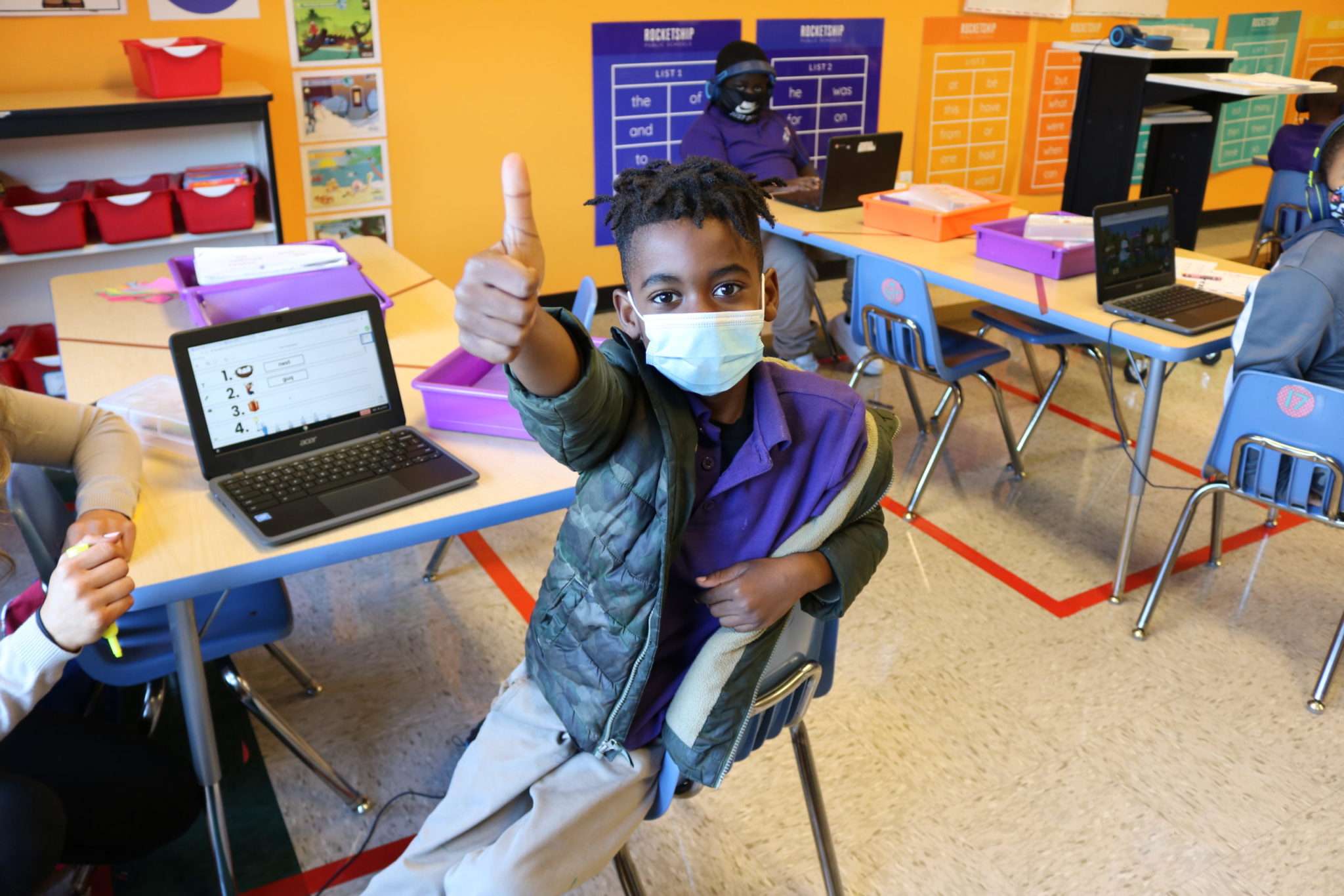
It’s not easy to find the positive right now. The first time some of my students came back to the building for in-person tutoring, I struggled. I wanted to hug them. I wanted to sit on the carpet and share. I wanted to lay in the classroom library and dust off the books. I knew this wasn’t going to be a reality and so did my kids. They all walked in, sat at their 6-feet apart desks, and checked their masks. I didn’t know if I should circulate the room or if I was isolating myself or what I should do.
My students immediately broke the ice. Their faces were beams of happiness and they wanted to do work. They yearned for our first novel study or language board. I had a decision to make. I could either operate in a place of confusion or just embrace the flow. I chose to let things be what they will be, and look for the positive in each interaction. It was a whole lot easier than I thought it would be, too!
I celebrated students for anything and everything. You remembered your computer charger today, great job! You tried your best on our quick write, I am so proud of you! The fact is we all need a cheerleader right now. And we know that celebrations are the best way to remind our students what they should be doing. And it works! My students now always remember to get hand sanitizer when they walk in or out of the room because we chose to celebrate that action. The key is that you celebrate them honestly. If you are truly excited for them, they will recognize it and repeat the action.
As educators, we aren’t always in a position to make the decisions, but we are in a prime position to ensure that wherever our classroom is, whether virtual, in a school building, or both, we are making these transitions as smooth as possible for our students.
Published on Tháng Một 15, 2021
Đọc thêm các câu chuyện về: Chưa phân loại.
Trong lớp học

3 Ways to Build Strong Parent-Teacher Connections
By Jeremiah Davis & Mrs. Aqeel, Rocketship Dream Community Prep | May 15, 2025
Ready to level up your relationships with your families this school year? Listen in for tips from an experienced teacher known for building strong bonds with parents!
Đọc thêm ⟩
Làm thế nào để nuôi dưỡng tư duy phát triển trong lớp học
| Ngày 10 tháng 4 năm 2025
Học cách nuôi dưỡng sự phản chiếu, đón nhận thử thách và thúc đẩy tính kiên trì ở bản thân bạn và học sinh của bạn.
Đọc thêm ⟩
Làm thế nào để cải thiện văn hóa trường học
Jeremiah Davis, Trợ lý chuyên môn, Rocketship Dream Community Prep | Ngày 3 tháng 3 năm 2025
Sẵn sàng nâng cao tinh thần ở trường của bạn? Hãy lồng ghép chín lễ kỷ niệm này vào năm học của bạn!
Đọc thêm ⟩
Làm thế nào để huấn luyện trong trường học cải thiện kết quả
Trường công lập Rockesthip | Ngày 4 tháng 2 năm 2025
Tìm hiểu cách huấn luyện trực tiếp và các buổi phản hồi hàng tuần có thể giúp giáo viên của bạn cảm thấy được hỗ trợ nhiều hơn trong suốt cả năm!
Đọc thêm ⟩
Lời khuyên cho giáo viên năm nhất về hội nghị phụ huynh
Jeremiah Davis, Trợ lý chuyên môn, Rocketship Dream Community Prep | Ngày 6 tháng 1 năm 2025
Bạn đang tìm kiếm mẹo hay nhất cho hội nghị phụ huynh? Hãy chuẩn bị với lời khuyên từ các nhà giáo dục của chúng tôi.
Đọc thêm ⟩
Giáo viên năm nhất? Dưới đây là năm lỗi cần tránh.
Jeremiah Davis, Trợ lý chuyên môn, Rocketship Dream Community Prep | Ngày 1 tháng 11 năm 2024
Xem những sai lầm mà hầu hết giáo viên năm nhất mắc phải và cách bạn có thể tiến bộ trong năm học này với một số mẹo đơn giản từ một đồng nghiệp giáo viên.
Đọc thêm ⟩
3 Hệ thống lớp học mà giáo viên mới thề sẽ tuân thủ
Trường công Rocketship | Ngày 30 tháng 9 năm 2024
Với tư cách là một giáo viên năm nhất, việc thiết lập một môi trường lớp học suôn sẻ và hiệu quả có thể khiến bạn cảm thấy hơi choáng ngợp. May mắn thay, những chiến lược đơn giản này có thể giúp ích rất nhiều.
Đọc thêm ⟩
Sự cộng tác giữa các giáo viên có thể mang lại lợi ích gì cho lớp học của bạn
Có sự góp mặt của Alejandra Chavez, Chuyên gia giáo dục tại Trường tiểu học Rocketship Mosaic | Ngày 10 tháng 6 năm 2024
Hãy lắng nghe cô Aly chia sẻ về cách một nhóm giáo viên nhỏ có thể tạo nên sự khác biệt lớn trong kết quả học tập của học sinh thông qua việc lập kế hoạch chu đáo, hợp tác tập trung và các điều chỉnh được cá nhân hóa. Cô Aly là một trong những giáo viên có thành tích cao nhất của chúng tôi tại California trong năm học 23-24.
Đọc thêm ⟩
Hỗ trợ phụ huynh của học sinh đa ngôn ngữ trong các cuộc họp gia đình/giáo viên
Emma Volpe, Học viện Rocketship United | Ngày 1 tháng 6 năm 2022
Nhận được thông tin chi tiết sâu sắc về cách tạo ra môi trường hội nghị gia đình - giáo viên toàn diện hơn.
Đọc thêm ⟩
5 cách để củng cố mối quan hệ trong lớp học
James Cross, Trợ lý Hiệu trưởng, Trường Tiểu học Rocketship Nashville Northeast | Ngày 20 tháng 2 năm 2022
Kỷ nguyên giáo dục mới đòi hỏi một cấp độ kết nối mới. Sau đây là một số mẹo chính để củng cố mối quan hệ trong lớp học của bạn trong năm học này.
Đọc thêm ⟩
5 cách lãnh đạo nhà trường có thể hướng dẫn và hỗ trợ giáo viên
Eesir Kaur, Giám đốc Phát triển Chuyên môn | Ngày 15 tháng 10 năm 2020
Bạn có phải là một nhà lãnh đạo trường học đang muốn hướng dẫn giáo viên của mình hiệu quả hơn không? Sau đây là những gì hiệu quả với chúng tôi.
Đọc thêm ⟩
 Tiếng Việt
  English
  Español de México