

5 Challenges Pre-K Teachers Face in Virtually Teaching & Solutions to Help
By Tenea Harris-Nance, Pre-K Teacher at AppleTree at Rocketship Legacy Prep
When we decided to become Pre-K teachers, we never imagined it would be contingent on a strong internet connection and parents being the teacher’s primary support. Since schools closed in March of 2020, like many other Pre-K teachers, I have had to rethink my whole teaching process to ensure I am providing my students with the best pre-school experience I can provide for them virtually. Through trial and error, I have learned that I already have the tools needed to ensure I am successful in navigating this virtual teaching; I just needed to figure out a way that translates through a computer screen versus in-person.
We know we’re not alone in these struggles, so we wanted to share some of the key challenges we’ve faced as Pre-K teachers this past year and some solutions that may help you in your virtual classroom.
Challenge #1: How to increase student engagement virtually for pre-k students
Keeping students engaged virtually can seem like an impossible task, but I have learned to adapt what I have done for in-person learning to keep students engaged virtually. Visuals are key. The same way you create a warm, inviting classroom when teaching in-person, it is even more important to do so while teaching virtually.
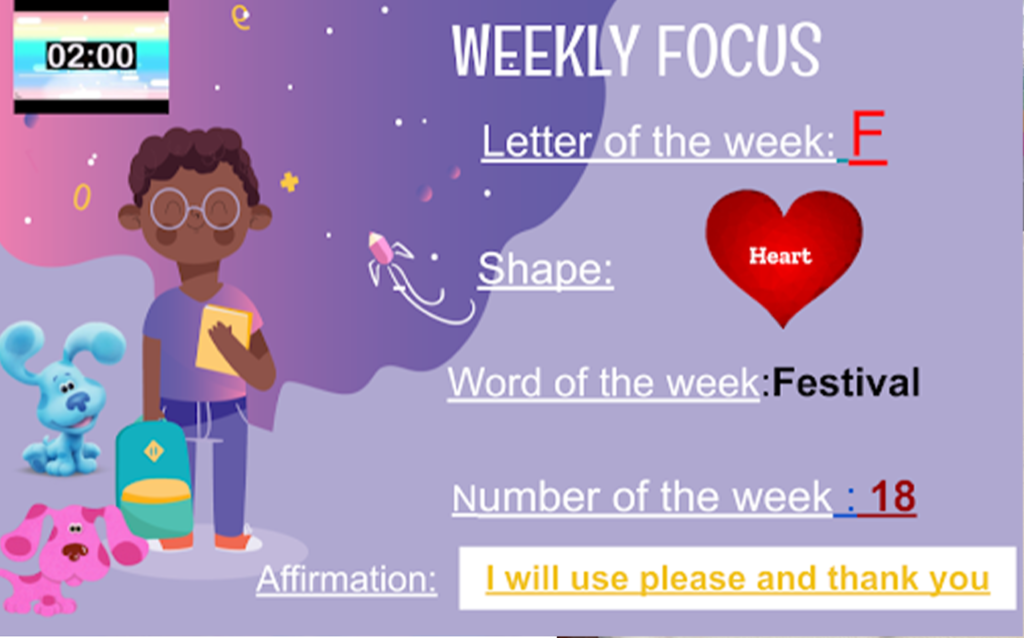
-We use Google Slides to guide our lessons and have developed a format that includes a classroom chant, morning song, and the vocabulary of the day for starters.
-Our powerpoints are colorful and fun, which grabs our student’s attention as soon as they get on. We use pictures, videos, and we incorporate sign language as well, which has been a huge success with our students.
-Movement breaks are another great way to keep students engaged. Developmentally we know that pre-k students’ attention span is between 15-20 minutes. Giving students these breaks allows them to have a 2-3 minute recharge to stay engaged.
-Lastly, incorporating what your students like into your lesson is an easy way to engage them. For example, we incorporate all of our student’s favorite cartoon characters or favorite superheroes in our powerpoints whenever we can. My biggest tip is not to be afraid to try new things to see what works, and if it doesn’t work, try to switch it up, think outside the box, and be creative.
Challenge #2: How to maximize student participation virtually
When the school year first started, we struggled with getting our students to attend our live lessons, and to be honest, we still continuously do. So, what’s helped us increase participation?
-We have found that having multiple ways to get the lesson content each day can be a huge help. We utilize Class Dojo to post activities that students can complete that are aligned with our live meetings. This allows those students who could not attend to watch the pre-recorded lessons and then show knowledge of what they have learned.
-The students who have perfect attendance get a shoutout weekly on our Class Dojo story.
-When we do the shoutouts, we also include snapshots of what we did in the lesson for the other students to see how much fun we are having while learning together and also to get them excited about joining us next time.
Challenge #3:Teaching pre-k students how to navigate technology
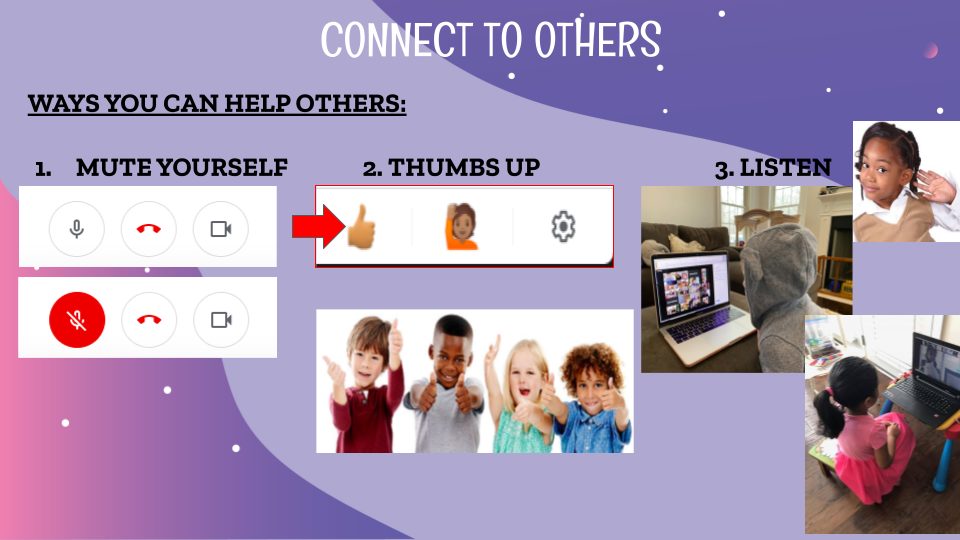
Let’s be honest; it can be a struggle to navigate our live lessons while still keeping students engaged. One big challenge was that our students were not familiar with how to mute and unmute themselves.
-Some of our students come to our live meetings without an adult or anyone in the room to help them when they’re called on to answer questions.
-We taught them sign language for help and be another resource they can use to answer questions or get our attention. When teaching your students how to navigate the platform, you are using its features, make it fun. We turned our lesson into a competition to see who gets to navigate the features we taught them, and our students love it. Teaching students how to navigate through their technology really helped make our live meetings run smoothly.
Challenge #4: How to address students speaking out of turn
Are you having a hard time managing students from calling out of turn? So were we. But once we taught our students the mute and unmute button, they were now freely unmuting themselves whenever they wanted. This became distracting for the other students and ultimately became a struggle for us to teach.
-We decided that we should bring the equity sticks to the virtual classroom to help manage students speaking out of turn. This new but old technique has helped our students to respect when others are speaking and not call out when it’s not their turn. Although we utilize the equity sticks, we also have a slide that is dedicated to the virtual classroom rules. One of the rules is that students stay on mute until they’re told it’s their turn.
-We decided that we should bring the equity sticks to the virtual classroom to help manage students speaking out of turn. This new but old technique has helped our students respect when others are speaking and not call out if it was not their turn. Although we utilize the equity sticks, we also have a slide dedicated to the virtual classroom rules, and staying on mute until told is one of them. The equity sticks are only one piece of a two-part solution. If you only couple them with having your virtual classroom rules and expectations, you will definitely get closer to the desired outcome you are looking for.
Challenge #5: Access to materials limits students’ learning opportunities
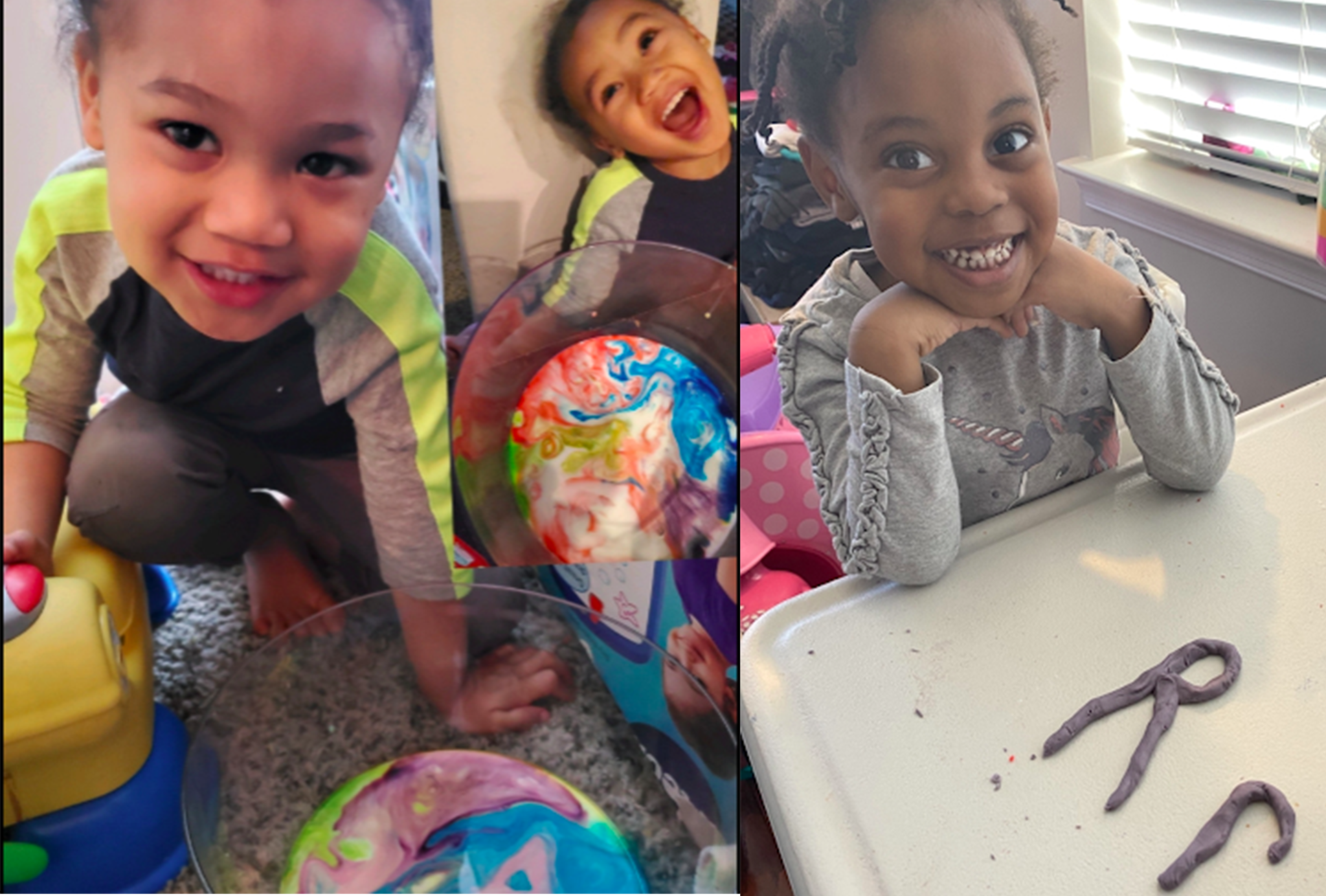
When we went virtual, we steered away from activities that we would normally do if we were in-person because we were scared that students wouldn’t be able to participate due to lack of materials. Although our school gives out unit supplies, we found that many of our students still did not have access to those materials like paint or pencils.
-When access to materials was an issue, we provided students with alternative ways to complete the assignments or activities.
-When we planned the activities, we went through the suggested list and decided what household items or items we thought could be used as an easy substitute. For example, if we were painting, we would also let them use crayons or markers if they didn’t have paint. If they were practicing writing, we let them use other materials such as shaving cream, dry erase markers, and dry erase board.
-When planning interactive activities such as counting, the students may need counters to try to find activities where students can still get the learning objective out of it with substituted materials. This was a big deal for us because we could provide students with a hands-on learning experience virtually, even if they didn’t have the exact materials suggested.
 Greetings! My name is Tenea Harris-Nance. I am a native Washingtonian and obtained my B.A. in Communications in 2008 from Trinity University and my Masters in Educational Administration with a concentration in early childhood in May 2020. This is my eighth school year at AppleTree and my 3rd year at the Rocketship Legacy Prep campus. I have been a mentor teacher for over five years. I love working with children and have been working with them for over ten years through various volunteer work, and other teaching opportunities. One of my favorite activities to do with my students is reading books! I am passionate about being a teacher because I receive great satisfaction in watching the growth of my students. I come from a family of teachers and love to teach and learn with my students.
Published on marzo 5, 2021
Lea más historias sobre: Sin categoría.
En el aula

3 Ways to Build Strong Parent-Teacher Connections
By Jeremiah Davis & Mrs. Aqeel, Rocketship Dream Community Prep | May 15, 2025
Ready to level up your relationships with your families this school year? Listen in for tips from an experienced teacher known for building strong bonds with parents!
Leer más ⟩
Cómo fomentar una mentalidad de crecimiento en el aula
| 10 de abril de 2025
Aprenda a cultivar la reflexión, aceptar los retos y fomentar la perseverancia en usted mismo y en sus alumnos.
Leer más ⟩
Cómo mejorar la cultura escolar
Jeremiah Davis, Paraprofesional, Rocketship Dream Community Prep | 3 de marzo de 2025
¿Listo para elevar la moral en tu colegio? Incorpore estas nueve celebraciones a su curso escolar.
Leer más ⟩
Cómo el coaching en las escuelas mejora los resultados
Escuelas Públicas de Rockesthip | Feb 4, 2025
Descubra cómo el coaching en directo y las sesiones semanales de feedback pueden ayudar a sus profesores a sentirse más respaldados durante todo el año.
Leer más ⟩
Conferencia de padres: consejos para profesores noveles
Jeremiah Davis, Paraprofesional, Rocketship Dream Community Prep | 6 de enero de 2025
¿Busca consejos para la conferencia de padres? Prepárese con los consejos de nuestros educadores.
Leer más ⟩
¿Primer año como profesor? Aquí tienes cinco errores que debes evitar.
Jeremiah Davis, Paraprofesional, Rocketship Dream Community Prep | 1 de noviembre de 2024
Descubre qué errores comete la mayoría de los profesores primerizos y cómo puedes salir adelante este curso escolar con algunos sencillos consejos de un colega educador.
Leer más ⟩
3 sistemas de aula por los que juran los nuevos profesores
Escuelas Públicas Rocketship | 30 de septiembre de 2024
Como profesor primerizo, establecer un entorno de clase fluido y productivo puede resultar un poco abrumador. Por suerte, estas sencillas estrategias pueden ayudar mucho.
Leer más ⟩
Cómo la colaboración entre profesores puede beneficiar a su clase
Presentación de Alejandra Chávez, especialista en educación de la escuela primaria Rocketship Mosaic | 10 de junio de 2024
Escuche a la Sra. Aly hablar de cómo un pequeño equipo de educadores puede marcar una gran diferencia en los resultados de los estudiantes mediante una planificación cuidadosa, una colaboración centrada y adaptaciones personalizadas. La Sra. Aly fue una de nuestras educadoras con mejores resultados en California en el curso 23-24.
Leer más ⟩
Apoyo a los padres de alumnos multilingües en las reuniones familia-profesor
Emma Volpe, Academia Rocketship United | 1 de junio de 2022
Obtenga reflexiones sobre cómo crear un entorno más integrador para las reuniones entre familias y profesores.
Leer más ⟩
5 maneras de fortalecer las relaciones en el aula
James Cross, Subdirector, Rocketship Nashville Northeast Elementary | 20 de febrero de 2022
La nueva era de la educación exige un nuevo nivel de conexión. Aquí tienes algunos consejos clave para fortalecer las relaciones en tu aula este curso escolar.
Leer más ⟩
5 formas en que los directores de centro pueden orientar y apoyar a los profesores
Eesir Kaur, Directora de Desarrollo Profesional | 15 de octubre de 2020
¿Es usted el director de un centro de enseñanza y quiere formar a sus profesores de forma más eficaz? Esto es lo que nos funciona a nosotros.
Leer más ⟩
 Español de México
  English
  Tiếng Việt