

Our Schools in Nashville Transitioned Back into the Classroom. Here’s How the First Two Weeks Went.
By James Cross, 4th Grade Teacher, Rocketship Nashville Northeast Elementary
My ground-floor one-bedroom apartment was never meant to be the home of an elementary school classroom. My 600 square foot apartment doesn’t even have a desk or a table to teach from. When we first went virtual, I bought a matte black patio chair that best aligned to my mid-century modern living room aesthetic and used the back of my couch as a surface to set my computer on. This wasn’t ideal, but I quickly learned that a classroom, however, doesn’t ascribe to a binary, a classroom exists on a spectrum.
Virtual teaching was stressful, new, frustrating, beautiful, and a burden that will plague us for years to come. My students learned though. Contrary to popular belief, learning didn’t stop. In fact, we learned resilience and grit and unapologetically proved that virtual learning is simply learning.
With that said, when I was allowed to reunite with my students in the building, I immediately jumped at the opportunity. Truthfully, I had reached a point in November where I started to accept that those empty desks and unread books back in our barren school building would simply continue to collect dust. Flash forward to March, as we are fast approaching the first anniversary since my school closed to keep us all safe during the onset of the 2020 global pandemic, and we are back in the building.
I’d like to share with you my experience over the first two weeks back. My school is still learning and so am I. We aren’t perfect, but we are safe.
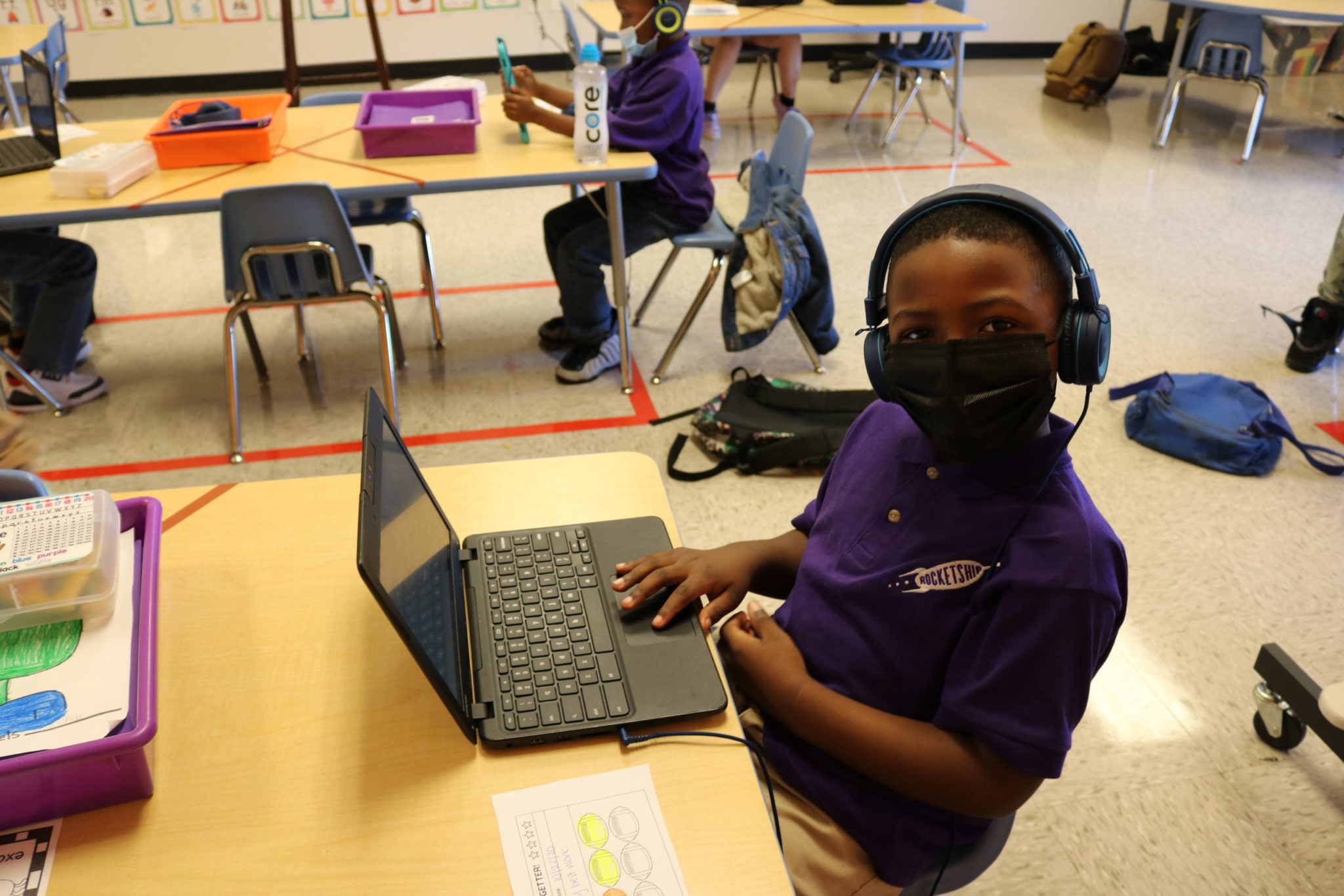
New safety guidelines dictate a good chunk of our normal classroom autonomy.
The huge area rug with the colored squares where we would read books and share in robust conversations with each other is gone. Our desks that were once zip-tied into table groups to promote group learning and community are now individually spaced out and a bright red square made from tape reminds us where their solitary home is. The walls that served as a testament to our learning and a museum of our greatest accomplishments now look similar to the walls of our now bare.
I quickly accepted that my classroom wasn’t going to be featured in a magazine this year (it never has, but call me a dreamer). Instead, I decided to focus on what my students immediately needed and now I can add to it when needed. This is the year that less certainly is more. While our classroom aesthetic might be a little less Pinterest perfect this year, love, joy, and learning transcend the missing rug and grouped tables.
Having an organized system helped me and my students’ families adjust to the new hybrid schedules.
The new school schedule is far from ideal. For our school, some students come on Monday and Tuesday, some are in-person on Wednesday and Thursday, some are still 100% virtual, some stay for tutoring after the school day. We’re all still trying to make sense of the new schedules. My role, as an educator, is to help my students and families make sense of this constantly evolving situation. I didn’t want to rely on school-wide calls and the hope that my students’ families would see the school’s social media post. I decided to own the responsibility of keeping my student’s families informed.
I fully embraced my role as a potential telemarketer and I relabeled each family contact in my phone with either an “a” or a “b” to keep track of their in-person schedule, or a “v” if they were staying virtual. Now, I am still able to provide the communication that families need to know, but I can swiftly target who needs what. I’m responsible for 62 students and being intentional about how I communicate with families has made this transition back extremely efficient. I know this sounds simple, but it has been vital to returning in-person.
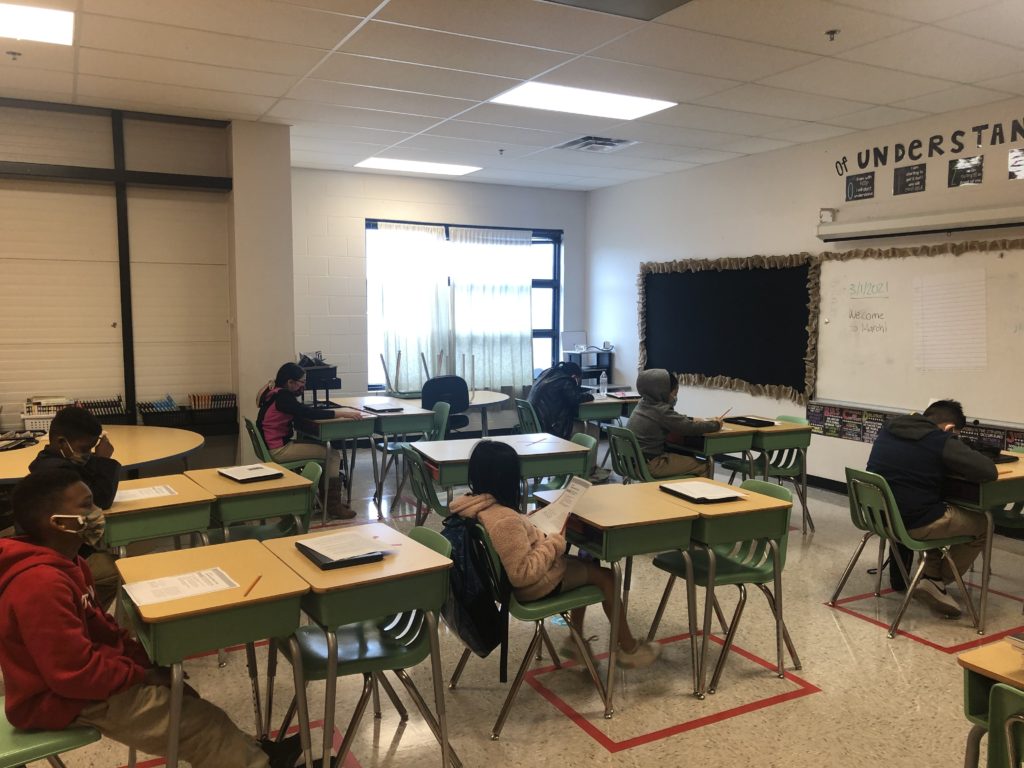
We started with a schedule of essentials students missed and needed.
Teachers are master planners. We routinely take a set of standards and end-of-year goals and miraculously construct a yearly plan that integrates everything our students need to know. It’s never easy, but it starts to become routine. I wanted to equivalate the opportunity to teach in-person again with what I’ve always done. I wanted to prepare a read-aloud, a writing block, close reading, guided reading, centers, and a language block for when I returned. The routine of teaching in-person sounded very comfortable, but it wasn’t what my students needed.
I chose to start slow. Here’s how my days go so far:
- We take a little bit longer than normal to eat breakfast. This ensures that we are following all safety protocols.
- Then we jump into a community meeting where we discuss what is going on with each of us emotionally and set our intentions for the day.
- Next, we move into a writing block. We write every day because the one thing virtual learning couldn’t replicate was the bond of taking pencil to paper.
- After writing, we work through a reading passage and break down some comprehension questions.
- We finish our reading block with a quick language practice.
- Additional time is spent diving into a good book or getting to collaborate on some partner work.
Our block, or what we do each day, will eventually grow, but for now, small steps are working just fine. Education isn’t about drilling knowledge, it’s creating learning opportunities big and small.
My grade-level teachers and I decided to partner to find new ways to personalize instruction.
I still have a lot of areas to get better at when it comes to being back in the physical classroom. We have students of all academic levels who opted to return in-person. You will always find me advocating for inclusive groups, but I know that I need to figure out how to better personalize and differentiate my instruction. I’m planning to partner with my teammates to create a shared grade level plan to accomplish this.
Returning to teach in the school building has left me with some throbbing feet and a full heart. I worry sometimes about what if one of my students contract COVID-19 or what if I somehow do and pass it on to them? I worry about this a lot. I’m also deeply concerned about what emotional toll that this year will have on my students for years to come. I certainly don’t have all the answers, and life is too beautiful to let us know the future. For now, my focus is reminding my students that they are safe at school, that they are loved, and that with time, things will get better.
Published on marzo 18, 2021
Lea más historias sobre: Sin categoría.
En el aula

3 Ways to Build Strong Parent-Teacher Connections
By Jeremiah Davis & Mrs. Aqeel, Rocketship Dream Community Prep | May 15, 2025
Ready to level up your relationships with your families this school year? Listen in for tips from an experienced teacher known for building strong bonds with parents!
Leer más ⟩
Cómo fomentar una mentalidad de crecimiento en el aula
| 10 de abril de 2025
Aprenda a cultivar la reflexión, aceptar los retos y fomentar la perseverancia en usted mismo y en sus alumnos.
Leer más ⟩
Cómo mejorar la cultura escolar
Jeremiah Davis, Paraprofesional, Rocketship Dream Community Prep | 3 de marzo de 2025
¿Listo para elevar la moral en tu colegio? Incorpore estas nueve celebraciones a su curso escolar.
Leer más ⟩
Cómo el coaching en las escuelas mejora los resultados
Escuelas Públicas de Rockesthip | Feb 4, 2025
Descubra cómo el coaching en directo y las sesiones semanales de feedback pueden ayudar a sus profesores a sentirse más respaldados durante todo el año.
Leer más ⟩
Conferencia de padres: consejos para profesores noveles
Jeremiah Davis, Paraprofesional, Rocketship Dream Community Prep | 6 de enero de 2025
¿Busca consejos para la conferencia de padres? Prepárese con los consejos de nuestros educadores.
Leer más ⟩
¿Primer año como profesor? Aquí tienes cinco errores que debes evitar.
Jeremiah Davis, Paraprofesional, Rocketship Dream Community Prep | 1 de noviembre de 2024
Descubre qué errores comete la mayoría de los profesores primerizos y cómo puedes salir adelante este curso escolar con algunos sencillos consejos de un colega educador.
Leer más ⟩
3 sistemas de aula por los que juran los nuevos profesores
Escuelas Públicas Rocketship | 30 de septiembre de 2024
Como profesor primerizo, establecer un entorno de clase fluido y productivo puede resultar un poco abrumador. Por suerte, estas sencillas estrategias pueden ayudar mucho.
Leer más ⟩
Cómo la colaboración entre profesores puede beneficiar a su clase
Presentación de Alejandra Chávez, especialista en educación de la escuela primaria Rocketship Mosaic | 10 de junio de 2024
Escuche a la Sra. Aly hablar de cómo un pequeño equipo de educadores puede marcar una gran diferencia en los resultados de los estudiantes mediante una planificación cuidadosa, una colaboración centrada y adaptaciones personalizadas. La Sra. Aly fue una de nuestras educadoras con mejores resultados en California en el curso 23-24.
Leer más ⟩
Apoyo a los padres de alumnos multilingües en las reuniones familia-profesor
Emma Volpe, Academia Rocketship United | 1 de junio de 2022
Obtenga reflexiones sobre cómo crear un entorno más integrador para las reuniones entre familias y profesores.
Leer más ⟩
5 maneras de fortalecer las relaciones en el aula
James Cross, Subdirector, Rocketship Nashville Northeast Elementary | 20 de febrero de 2022
La nueva era de la educación exige un nuevo nivel de conexión. Aquí tienes algunos consejos clave para fortalecer las relaciones en tu aula este curso escolar.
Leer más ⟩
5 formas en que los directores de centro pueden orientar y apoyar a los profesores
Eesir Kaur, Directora de Desarrollo Profesional | 15 de octubre de 2020
¿Es usted el director de un centro de enseñanza y quiere formar a sus profesores de forma más eficaz? Esto es lo que nos funciona a nosotros.
Leer más ⟩
 Español de México
  English
  Tiếng Việt