

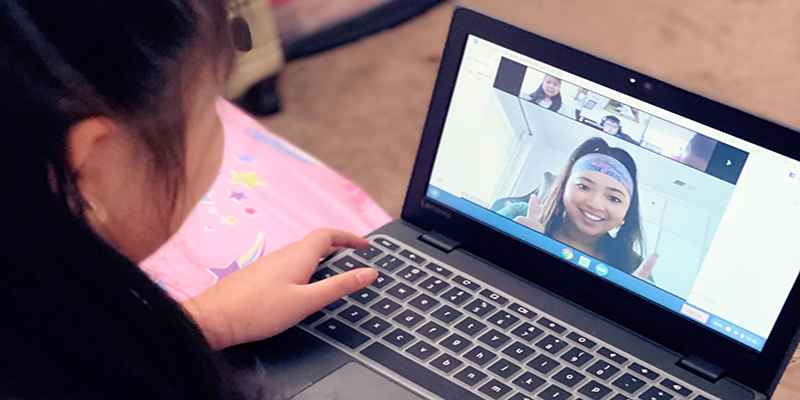
8 Ways Educators Can Excel During Distance Learning
Jordan Blanton, Associate Director of Humanities
Like many, our Rocketship teachers greatly miss connecting with students in person. But as the coronavirus pandemic continues, so do our tireless efforts to offer engaging, high-quality education virtually.
Ask any educator you know, and you’ll likely hear teaching virtually is no easy feat. Thankfully, our school leaders and teachers pivoted quickly, and collaboratively came up with fresh ideas to make distance learning a dynamic experience. Here, teachers hold students accountable while boosting engagement, facilitating growth, and offering 1:1 check-ins.
However, many teachers, especially those new to the role, are seeking tips during this time. So to support the wider education community, we compiled these eight ways educators can help students thrive while learning from home.
1. Kick-off your meeting early with a friendly competition.
Let students know that if they log in to your video meetings 10 minutes before the start time, there will be some friendly competition. Use Quizlet or Kahoot to get their brains warmed up and ready to go. When you start on a high note, your lesson will begin on time and with high attendance.
2. Set clear and consistent expectations.
Invest students in virtual meeting “norms” by co-creating the agreements together. For starters, it’s helpful to be clear on what you want to see and hear students doing during your meetings. They should be in a well-lit room, out of bed, and dressed for success with their videos on, faces in the frame, and ready to engage. Once you establish those basics, ask them to generate ideas about what our actions and behaviors should be. Dig deeper by pushing them to think about why those actions are important. Start each lesson with the agreed-upon norms typically (3-5) and hold students accountable for upholding them. You might be delightfully surprised when they start to hold each other accountable too.
3. Launch every class with a celebration!
Reinforce the transferable strategies that students used by spotlighting student work when you launch your video meeting. Take a picture and include it in your slide deck to make the work and feedback visible. Visibility into excellent work will make the feedback concrete for students. Let yourself get creative with celebrations. Many of our teachers use TikTok to announce students who passed exams or spotlight those who’ve made great strides week over week.
4. Stamp the behavior you want students to repeat.
At Rocketship, we teach the “reader” and “writer” in our students, instead of teaching the actual “reading” and “writing” itself. This means that the skills and strategies found in our lesson plans can be “transferred” or applied to a variety of contexts. When students demonstrate transferable thinking, we make sure to let the entire class know. Doing so ensures that we are teaching to the future and building independence in our students.
For example, if a student analyzes a character in a fictional story, then the teacher will want to “stamp” this “transferable thinking” to ensure that all students continue to apply it to any future text within this genre. Therefore, the teacher might say something like, “Great fiction readers always pay attention to the characters in the story to understand the lesson more deeply. Did you notice how ______ student did a wonderful job paying close attention to the relationship between our characters in order to better understand the problem of the story? Make sure to keep doing that every time you read fictional stories! Doing so will help you unpack the lesson the author is trying to convey!”
By “stamping” the transferable thinking, students will be able to build strong reading and writing habits that extend to any text they encounter or write in the future.
5. Give individual feedback.
Let students know that their independent work matters and it’s not just to keep them busy at home. Using platforms like Seesaw and Google Classroom will allow you to easily review work and leave comments. These individual touchpoints go beyond accountability and are essential to reinforce skills. This practice sends the message to students that you care enough about them to analyze their work. Plus, there is an added bonus of gathering trends, so you can address misconceptions the following day.
6. Hold time for 1:1 connections.
Setting up a consistent time to call or “Zoom” with your students is a great way to keep students engaged and connected. At Rocketship, students meet with their Humanities and STEM teachers at least once per week. Some students engage with a teacher a least once a day in a small group or individual setting. These calls start with care by asking about a student’s general well-being. Then, they segway into coaching opportunities to help students with their academic tasks. For English learners, this is an opportunity to explicitly teach language, so that students can fully access the content. As a result, students know that you care about them as a person, value the work they are creating, and want to see them be successful.
7. Engage parents often.
Consistent teacher-parent communication is incredibly important during distance learning. Keep parents in the loop on what their child’s weekly learning goals are to hold students accountable. Teachers can utilize communication features in Seesaw, the multilingual Talking Points app, or texting to keep parents informed on their child’s progress and struggles.
8. Schedule time for self-care during and after the school day.
As educators who deeply care about our students, it’s easy to put off personal care. Yet, as distance learning stretches on, it’s critical to carve out time to decompress and take care of you. Make sure you’re taking small screen breaks throughout the day to reset and a full lunch break. Set recurring reminders on your calendar to end the workday and spend time doing things that fulfill you or connect with family. After all, in order to expect the best of our students we have to show up each day mentally replenished, as well.
While our educators have learned many lessons and codified best practices from the spring 2020 distance learning experience, we’re always looking to improve the experience for students, families, and teachers and will continue to share helpful insight as the school year progresses. Here’s to another year of unleashing potential together!
Published on agosto 24, 2020
Lea más historias sobre: Sin categoría.
En el aula

3 Ways to Build Strong Parent-Teacher Connections
By Jeremiah Davis & Mrs. Aqeel, Rocketship Dream Community Prep | May 15, 2025
Ready to level up your relationships with your families this school year? Listen in for tips from an experienced teacher known for building strong bonds with parents!
Leer más ⟩
Cómo fomentar una mentalidad de crecimiento en el aula
| 10 de abril de 2025
Aprenda a cultivar la reflexión, aceptar los retos y fomentar la perseverancia en usted mismo y en sus alumnos.
Leer más ⟩
Cómo mejorar la cultura escolar
Jeremiah Davis, Paraprofesional, Rocketship Dream Community Prep | 3 de marzo de 2025
¿Listo para elevar la moral en tu colegio? Incorpore estas nueve celebraciones a su curso escolar.
Leer más ⟩
Cómo el coaching en las escuelas mejora los resultados
Escuelas Públicas de Rockesthip | Feb 4, 2025
Descubra cómo el coaching en directo y las sesiones semanales de feedback pueden ayudar a sus profesores a sentirse más respaldados durante todo el año.
Leer más ⟩
Conferencia de padres: consejos para profesores noveles
Jeremiah Davis, Paraprofesional, Rocketship Dream Community Prep | 6 de enero de 2025
¿Busca consejos para la conferencia de padres? Prepárese con los consejos de nuestros educadores.
Leer más ⟩
¿Primer año como profesor? Aquí tienes cinco errores que debes evitar.
Jeremiah Davis, Paraprofesional, Rocketship Dream Community Prep | 1 de noviembre de 2024
Descubre qué errores comete la mayoría de los profesores primerizos y cómo puedes salir adelante este curso escolar con algunos sencillos consejos de un colega educador.
Leer más ⟩
3 sistemas de aula por los que juran los nuevos profesores
Escuelas Públicas Rocketship | 30 de septiembre de 2024
Como profesor primerizo, establecer un entorno de clase fluido y productivo puede resultar un poco abrumador. Por suerte, estas sencillas estrategias pueden ayudar mucho.
Leer más ⟩
Cómo la colaboración entre profesores puede beneficiar a su clase
Presentación de Alejandra Chávez, especialista en educación de la escuela primaria Rocketship Mosaic | 10 de junio de 2024
Escuche a la Sra. Aly hablar de cómo un pequeño equipo de educadores puede marcar una gran diferencia en los resultados de los estudiantes mediante una planificación cuidadosa, una colaboración centrada y adaptaciones personalizadas. La Sra. Aly fue una de nuestras educadoras con mejores resultados en California en el curso 23-24.
Leer más ⟩
Apoyo a los padres de alumnos multilingües en las reuniones familia-profesor
Emma Volpe, Academia Rocketship United | 1 de junio de 2022
Obtenga reflexiones sobre cómo crear un entorno más integrador para las reuniones entre familias y profesores.
Leer más ⟩
5 maneras de fortalecer las relaciones en el aula
James Cross, Subdirector, Rocketship Nashville Northeast Elementary | 20 de febrero de 2022
La nueva era de la educación exige un nuevo nivel de conexión. Aquí tienes algunos consejos clave para fortalecer las relaciones en tu aula este curso escolar.
Leer más ⟩
5 formas en que los directores de centro pueden orientar y apoyar a los profesores
Eesir Kaur, Directora de Desarrollo Profesional | 15 de octubre de 2020
¿Es usted el director de un centro de enseñanza y quiere formar a sus profesores de forma más eficaz? Esto es lo que nos funciona a nosotros.
Leer más ⟩
 Español de México
  English
  Tiếng Việt