

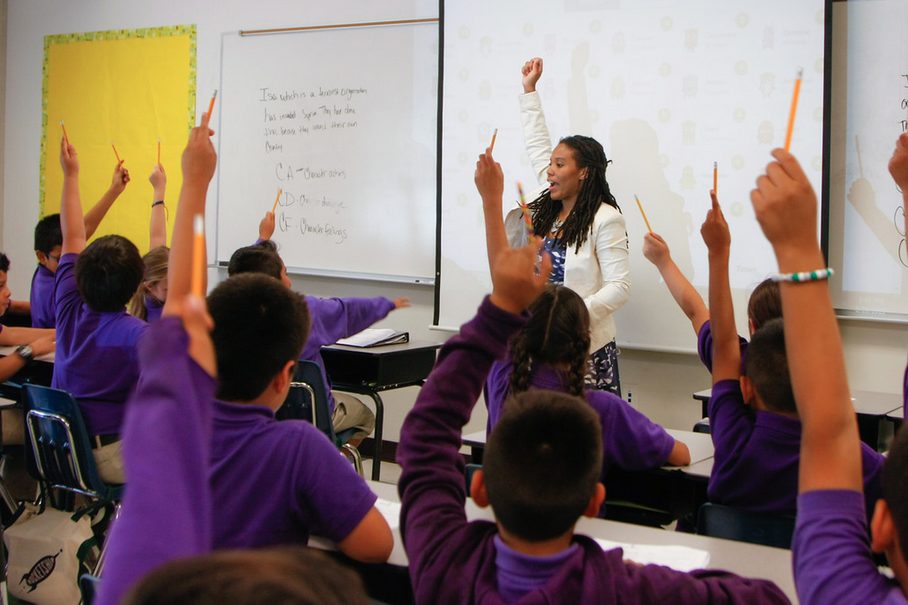
A Beginner’s Guide to Creating Classroom Systems & Routines
One of the most critical ways to start your school year strong is to introduce systems that reflect the culture and beliefs you want your students to operate from when they’re inside the classroom. At Rocketship, we help our teachers build systems that help them manage their classroom, bring enthusiasm to the school day, and encourage a culture of persistence and excellence. If you’re looking for guidance on how to bring these elements into your classroom, follow along with Rocketship educators and leaders who have worked diligently on creating highly effective classroom systems and routines.
What are Classroom Systems & Routines?
In a classroom, routines are necessary for some of those repetitive tasks that students do each day. Whether it’s entering the classroom, walking in the hallway, moving to the carpet, or passing out papers, systems are key to a high-functioning and efficient classroom. At Rocketship, we want our systems and routines to do a few things. First, (and most importantly) they need to keep kids safe. Relatedly, they should save time, be fun and engaging, and be super clear for all of our students.
To dive a bit deeper, the type of systems that teachers might need depends on a few factors. The student’s grade level, the content, and the physical layout of the space are all important considerations. For example, we have all of our teachers and students work on their transitions into the classroom each day. We want that entrance to be done safely, but we also want to ensure that our students get a super warm welcome and know exactly what they need to do to get ready for the day.
Below you’ll find more specific steps on how to establish routines in your own classroom:
How to Establish & Reinforce Systems
Tip 1: Plan Out Your Routines
Think through what routines and systems you might need to do each day. Whether you’re a Pre-Kindergarten teacher or are working with students in AP Physics, there are always systems and processes in your classroom that happen frequently.
How can you ensure that each time students enter, pass in their homework, or line up for recess that it’s a process that runs smoothly? How can you arrange your space to accommodate and support your systems? Think through your classroom and the physical space to see what you can change.
Tip 2: Roll it Out & Practice
If you ask us, the key to a high-functioning system is one that the teacher makes sure is done exceptionally well consistently. To do anything well repeatedly takes practice, especially with students who often have their own ideas sometimes!
Introduce your systems early and give students multiple opportunities to practice successfully. Break it down into steps and praise your students when they do it flawlessly. Make sure they get the opportunity to have multiple opportunities, both when you roll out the routine and throughout the year.
Tip 3: Respond Immediately and Positively
As the teacher, you are the key person who is going to make those systems perfect. To do that, you’re going to need to course correct. We have found that staying optimistic and giving bite-sized, manageable steps that students can practice lead to strong outcomes. Relatedly, there should be time set into your class or day to really get those systems down, especially in the first few days and weeks. During that practice time, make sure you aren’t multitasking and you’re being both clear and vigilant about what you’re communicating and what you’re looking for. Of course, there are going to be times where not every student gets it right. That’s okay! If necessary, have the students (or class) repeat it, and praise them when they get it right!
Tip 4: Get feedback
We love feedback at Rocketship, and it’s something we always use to improve. Ask your Principal or manager to come in and observe you. If needed, try out video, too. Record a transition you’re looking to get better at and share it with a mentor or a teacher you trust. As you probably know, teaching is hard. Just like we have to give our students multiple chances to get it right, we have to allow the same grace for our own work. Making sure we’re constantly thinking about how to run a safer and more efficient classroom is the hallmark of what great teaching is, and it’s a great practice to seek out help from time to time!
Now that you’ve learned how to develop strong classroom systems and routines, let’s get to the fun stuff. Learn ‘How to Build a Strong Classroom Culture’ in this next article.
Published on septiembre 26, 2020
Lea más historias sobre: Sin categoría.
En el aula

3 Ways to Build Strong Parent-Teacher Connections
By Jeremiah Davis & Mrs. Aqeel, Rocketship Dream Community Prep | May 15, 2025
Ready to level up your relationships with your families this school year? Listen in for tips from an experienced teacher known for building strong bonds with parents!
Leer más ⟩
Cómo fomentar una mentalidad de crecimiento en el aula
| 10 de abril de 2025
Aprenda a cultivar la reflexión, aceptar los retos y fomentar la perseverancia en usted mismo y en sus alumnos.
Leer más ⟩
Cómo mejorar la cultura escolar
Jeremiah Davis, Paraprofesional, Rocketship Dream Community Prep | 3 de marzo de 2025
¿Listo para elevar la moral en tu colegio? Incorpore estas nueve celebraciones a su curso escolar.
Leer más ⟩
Cómo el coaching en las escuelas mejora los resultados
Escuelas Públicas de Rockesthip | Feb 4, 2025
Descubra cómo el coaching en directo y las sesiones semanales de feedback pueden ayudar a sus profesores a sentirse más respaldados durante todo el año.
Leer más ⟩
Conferencia de padres: consejos para profesores noveles
Jeremiah Davis, Paraprofesional, Rocketship Dream Community Prep | 6 de enero de 2025
¿Busca consejos para la conferencia de padres? Prepárese con los consejos de nuestros educadores.
Leer más ⟩
¿Primer año como profesor? Aquí tienes cinco errores que debes evitar.
Jeremiah Davis, Paraprofesional, Rocketship Dream Community Prep | 1 de noviembre de 2024
Descubre qué errores comete la mayoría de los profesores primerizos y cómo puedes salir adelante este curso escolar con algunos sencillos consejos de un colega educador.
Leer más ⟩
3 sistemas de aula por los que juran los nuevos profesores
Escuelas Públicas Rocketship | 30 de septiembre de 2024
Como profesor primerizo, establecer un entorno de clase fluido y productivo puede resultar un poco abrumador. Por suerte, estas sencillas estrategias pueden ayudar mucho.
Leer más ⟩
Cómo la colaboración entre profesores puede beneficiar a su clase
Presentación de Alejandra Chávez, especialista en educación de la escuela primaria Rocketship Mosaic | 10 de junio de 2024
Escuche a la Sra. Aly hablar de cómo un pequeño equipo de educadores puede marcar una gran diferencia en los resultados de los estudiantes mediante una planificación cuidadosa, una colaboración centrada y adaptaciones personalizadas. La Sra. Aly fue una de nuestras educadoras con mejores resultados en California en el curso 23-24.
Leer más ⟩
Apoyo a los padres de alumnos multilingües en las reuniones familia-profesor
Emma Volpe, Academia Rocketship United | 1 de junio de 2022
Obtenga reflexiones sobre cómo crear un entorno más integrador para las reuniones entre familias y profesores.
Leer más ⟩
5 maneras de fortalecer las relaciones en el aula
James Cross, Subdirector, Rocketship Nashville Northeast Elementary | 20 de febrero de 2022
La nueva era de la educación exige un nuevo nivel de conexión. Aquí tienes algunos consejos clave para fortalecer las relaciones en tu aula este curso escolar.
Leer más ⟩
5 formas en que los directores de centro pueden orientar y apoyar a los profesores
Eesir Kaur, Directora de Desarrollo Profesional | 15 de octubre de 2020
¿Es usted el director de un centro de enseñanza y quiere formar a sus profesores de forma más eficaz? Esto es lo que nos funciona a nosotros.
Leer más ⟩
 Español de México
  English
  Tiếng Việt