

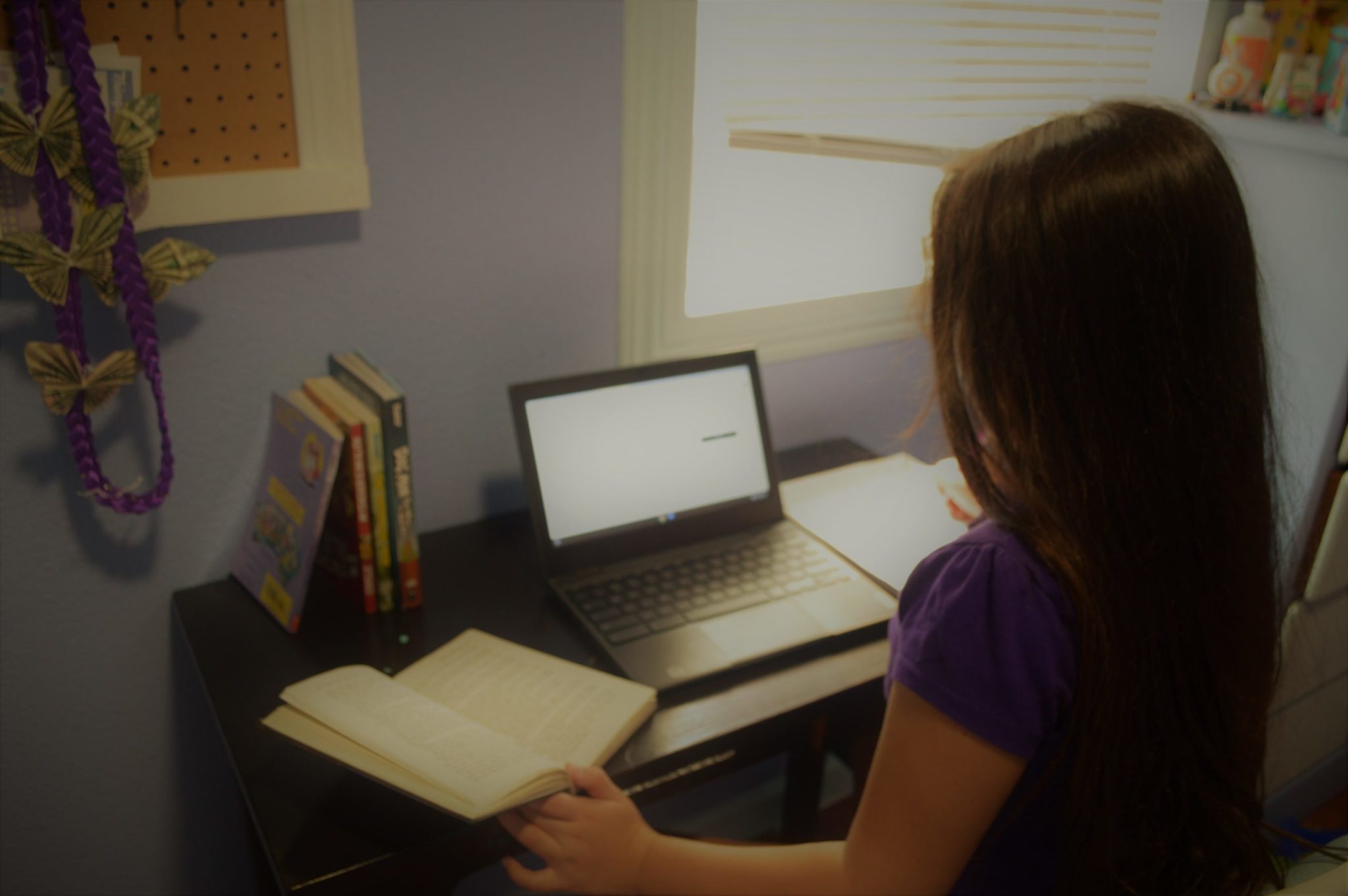
6 Virtual Teaching Tips for Multilingual Learners
Brianna Gargano, Multilingual Specialist, Rocketship Nashville Northeast Elementary
“Okay so we are going to start something new. It is called Virtual Learning. Let’s start by practicing how to mute and unmute. Okay, everyone unmute in 3,2,1. Great! Rodrigo gets a dojo point, Amiah gets a dojo point. Derek, unmute, please. Try it. Derek, yes, the button that looks like a microphone? Oh, nevermind. Forget it. You’re okay!”
This is the sound of zoom classes all across the country.
For the last seven months, we have experienced teaching in a new, creative way that has opened up the box of possibilities for this next generation to use the skills of technology and apply it through academics like never before. However, to say this is equitable for all learners would be a fallacy.
As an English as a Second Language Specialist, I find myself researching where my students fall in the data concerning US Schools. An average of 10.1% of students are multilingual students, formerly known as English Language Learners (ELL) or English Second Language students (ESL). For teachers in Tennessee, 4.6% of students are multilingual. A small amount, perhaps, but what happens when we leave the 10.1% percent behind due to a language barrier?
Here are a few tips to ensure your distance learning lessons are accessible for multilingual learners.
1. Identify a Language Barrier
How do you identify a language barrier, and contrast that barrier from an academic holdback? Simple. Ask in their language, use visuals, or reword the task to be more student-friendly with tier 1 words to ensure the student understands what they’re being asked to do. If the task becomes more accessible, it is a language barrier. If the task is harder or stays the same, it is both.
We often see students struggle in class when their English-speaking peers are working on a task. Then, the camera pans to the multilingual student who is silently doodling their name over and over because it is, quite literally, the only thing they have access to on the paper. When I walk over, I notice that there are several eraser marks and faded writing of another language written in the answer box, but had been erased prior to me hovering over.
2. Use Cognates to Create Clarity
I notice two things: 1) this student has no idea what has been put in front of them, and 2) this student can read and write in their first language. This pushes me to ask the student to use cognates (words that share the same parent language and thus look similar on paper due to spelling or sound the same phonetically). This strategy is best used for students who are new to our country and can read and write in their first language. 40% of words in English have Spanish cognates and while this only works for some languages, this is helpful for the 80% of Latinx students that comprise our 10.1% overall multilingual student population in the US.
3. Use Total Physical Response (TPR) to Make Concepts Stick
Another strategy that is a favorite of all theatre majors is TPR or Total Physical Response. This strategy has three parts and has to meet the criteria before being used in a rigorous, inclusive setting: manageable, meaningful, and joyful.
To start, pick a set of words or just one word, think about the definition, choose a small (waist up) movement, move no more than 3 seconds, and make sure it is taught in the most joyful way possible.
“Okay, show me osmosis in one, two, three!” Osmosis means…..moving through water…” all while doing the movement. When a student is wanting to use a word, cue them up by doing the movement. Then, their brain will activate the meaning of the word, while meeting them where they are linguistically.
A good example of this is a letter names and sounds video created by one of our teachers that has been used throughout our school and has a proven success rate of 40% LNS (letter names and sounds) mastered in September through virtual learning alone.
4. Invite Alternative Ways to Learn with Thinking Maps
There are 8 ways our brains process information in eight different ways: defining, describing, comparing/contrasting, sequencing, cause, and effect, identifying, and analogies. Multilingual students are making room for a new language to be acquired while still developing their first language. This is why we introduced thinking maps into our curriculum.
A third-party study showed that using thinking maps in elementary and middle school had evidence of 1.8 times more likely to surpass district growth in reading, and 2.7 times more likely in math. Every week I’m given the opportunity to showcase a strategy to use with our multilingual students each week. During the month of September, we incorporated thinking maps into grade levels K through 4.
Here we distributed imagery thinking maps where students could dissect and map out words from a text they had read. Each bubble represented a sense used in each word. This changed the game for teaching the unit that was meant to be given orally. This gave students the hands-on experience they deserve in learning-even reading!
In math, students used a tree map to break down numbers to expanded form. There are many ways to utilize thinking maps. Thinking maps have transitioned from being “another thing” to “the thing” for teachers, and that is how you know you have truly collaborated with your school team.
Overall, multilingual students come to us from different countries, carrying baggage from whatever they left behind. We know that in this political climate, they enter the country feeling unwelcome, and in school, carry an even heavier suitcase as they yearn to fit in while not yet feeling comfortable speaking the language. Using terms such as “multilingual” instead of English Learner changes the narrative from “This is the language of learning.” to “This is another language you get to learn while you’re here.” So, when I think about the 10.1%, I don’t see a number. I see names and faces, and I won’t leave them behind.
5. Use color coding to help students differentiate content.
Associating colors with certain content helps students quickly distinguish between different concepts and ideas. How does this work? Fill in words, numbers, and shapes particular colors that will help students remember the concept.
6. Use virtual cooperative strip paragraphs in your lessons.
A virtual strip paragraph is a paragraph composed of sentences created by student groups, where the students piece together one paragraph on a certain topic. How does it work? Students create a sentence in their groups on a topic, and when they are brought back together they determine which order the sentences will go in for the paragraph to flow best. Why is it effective? Well, all domains go to work when working with an intentional group. Writing practice, and explanatory speaking. It’s also accessible for all students and engaging.
I hope these tips help! If you want to explore more ways you can make lessons accessible for students with exceptionalities and diverse needs, check out this webinar below.
Anonymous. (2020, February 18). Language Acquisition: An Overview. Retrieved October 12, 2020, from https://www.colorincolorado.org/article/language-acquisition-overview
English Language Learners in Public Schools. (2020, May). Retrieved October 11, 2020, from https://nces.ed.gov/programs/coe/indicator_cgf.asp
The Effects of Thinking Maps in Raising Student Achievement: A Retrospective Study of Outcomes from Implementing Schools. (n.d.). Retrieved October 12, 2020, from https://www.thinkingmaps.com/effects-of-thinking-maps/
Published on diciembre 7, 2020
Lea más historias sobre: Sin categoría.
En el aula

3 Ways to Build Strong Parent-Teacher Connections
By Jeremiah Davis & Mrs. Aqeel, Rocketship Dream Community Prep | May 15, 2025
Ready to level up your relationships with your families this school year? Listen in for tips from an experienced teacher known for building strong bonds with parents!
Leer más ⟩
Cómo fomentar una mentalidad de crecimiento en el aula
| 10 de abril de 2025
Aprenda a cultivar la reflexión, aceptar los retos y fomentar la perseverancia en usted mismo y en sus alumnos.
Leer más ⟩
Cómo mejorar la cultura escolar
Jeremiah Davis, Paraprofesional, Rocketship Dream Community Prep | 3 de marzo de 2025
¿Listo para elevar la moral en tu colegio? Incorpore estas nueve celebraciones a su curso escolar.
Leer más ⟩
Cómo el coaching en las escuelas mejora los resultados
Escuelas Públicas de Rockesthip | Feb 4, 2025
Descubra cómo el coaching en directo y las sesiones semanales de feedback pueden ayudar a sus profesores a sentirse más respaldados durante todo el año.
Leer más ⟩
Conferencia de padres: consejos para profesores noveles
Jeremiah Davis, Paraprofesional, Rocketship Dream Community Prep | 6 de enero de 2025
¿Busca consejos para la conferencia de padres? Prepárese con los consejos de nuestros educadores.
Leer más ⟩
¿Primer año como profesor? Aquí tienes cinco errores que debes evitar.
Jeremiah Davis, Paraprofesional, Rocketship Dream Community Prep | 1 de noviembre de 2024
Descubre qué errores comete la mayoría de los profesores primerizos y cómo puedes salir adelante este curso escolar con algunos sencillos consejos de un colega educador.
Leer más ⟩
3 sistemas de aula por los que juran los nuevos profesores
Escuelas Públicas Rocketship | 30 de septiembre de 2024
Como profesor primerizo, establecer un entorno de clase fluido y productivo puede resultar un poco abrumador. Por suerte, estas sencillas estrategias pueden ayudar mucho.
Leer más ⟩
Cómo la colaboración entre profesores puede beneficiar a su clase
Presentación de Alejandra Chávez, especialista en educación de la escuela primaria Rocketship Mosaic | 10 de junio de 2024
Escuche a la Sra. Aly hablar de cómo un pequeño equipo de educadores puede marcar una gran diferencia en los resultados de los estudiantes mediante una planificación cuidadosa, una colaboración centrada y adaptaciones personalizadas. La Sra. Aly fue una de nuestras educadoras con mejores resultados en California en el curso 23-24.
Leer más ⟩
Apoyo a los padres de alumnos multilingües en las reuniones familia-profesor
Emma Volpe, Academia Rocketship United | 1 de junio de 2022
Obtenga reflexiones sobre cómo crear un entorno más integrador para las reuniones entre familias y profesores.
Leer más ⟩
5 maneras de fortalecer las relaciones en el aula
James Cross, Subdirector, Rocketship Nashville Northeast Elementary | 20 de febrero de 2022
La nueva era de la educación exige un nuevo nivel de conexión. Aquí tienes algunos consejos clave para fortalecer las relaciones en tu aula este curso escolar.
Leer más ⟩
5 formas en que los directores de centro pueden orientar y apoyar a los profesores
Eesir Kaur, Directora de Desarrollo Profesional | 15 de octubre de 2020
¿Es usted el director de un centro de enseñanza y quiere formar a sus profesores de forma más eficaz? Esto es lo que nos funciona a nosotros.
Leer más ⟩
 Español de México
  English
  Tiếng Việt