

6 Lessons Learned About Better Teaching During the Pandemic
*This article was originally featured on Edweek.org.
If there is a silver lining to the heavy emphasis on remote and hybrid instruction during the pandemic, it is this: Students are getting more opportunities to work independently and at their own pace—and in the process, they are becoming better problem-solvers.
At least that is the take of educators working in schools where personalized learning is the centerpiece of instruction. They say the shift to remote and hybrid instruction has given them an opportunity to deepen their commitment to learner-centered approaches and build new strategies that will continue to be applied once all students are able to return to school buildings at full capacity.
“When we had to shift to remote, that mindset was already there—the mindset of pulling small groups, developing independent learners, making kids own their own learning,” said Katie Speth, the principal of Disney II Magnet School, a personalized learning pre-K-12 school in Chicago that is remaining fully remote for the fall semester. “In terms of logistics, remote learning is incredibly difficult—people don’t realize how much more time it takes teachers. You don’t have that instant feedback, you don’t have the ability to scan the room, but I think the mindsets were [already] there: ‘I know how to set the stage to help students.’ ”
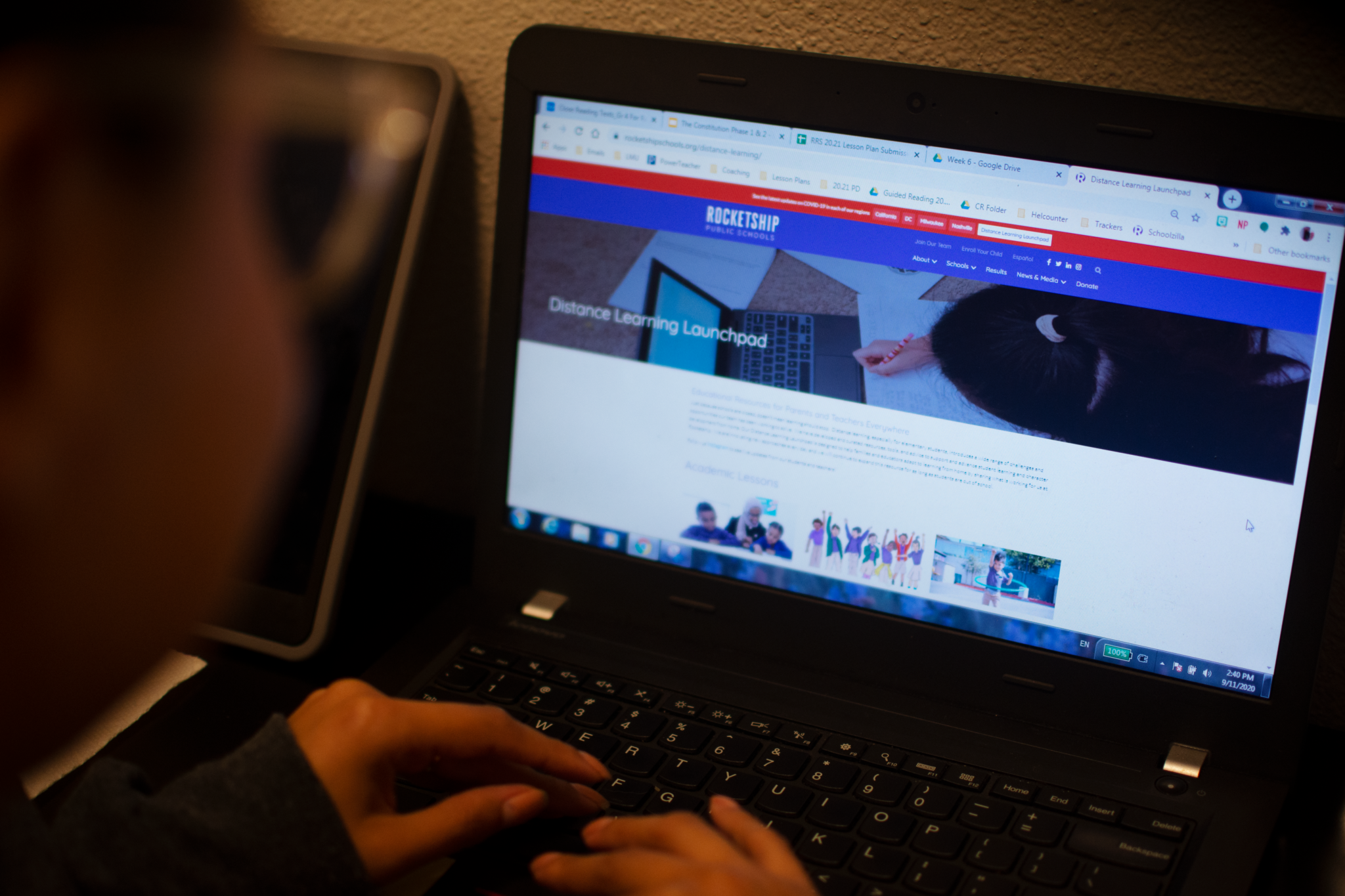
Schools in personalized learning networks such as High Tech High, LEAP Innovations, Rocketship, and Summit Learning have had to make teaching and learning adjustments whether they are fully remote this semester or having students come to campus some or five days a week. These changes, educators say, have helped them become even more focused on the primary goals of personalized learning: tailoring education to address the individual strengths and weaknesses and personal interests of students.
One cautionary note, however, is that the research on the effectiveness of personalized learning was limited, at best, before the pandemic, and some personalized learning initiatives have prompted pushback and criticism from parents and students, who say the programs put too much emphasis on the use of technology and software algorithms to drive learning.
Here are some of the lessons learned so far.
1. Educators have no choice but to be flexible these days, and that’s a good thing.
Personalized learning has always required some degree of flexibility, but teachers say they must be even more nimble now. In schools that are still remote, teachers have to account for students’ individual situations and limitations at home. And in schools that have resumed in-person instruction, educators have to be ready to switch the mode of instruction on a dime as positive or presumed positive cases of COVID-19 occur.
“We’re realizing that we don’t have as much control over what the final product or task is going to look like,” said Heather Morrison, the instructional coach for Disney II’s high school campus. “It’s really pushing us to think of what are the different ways we could have students demonstrate what they know.”
For example, she said, teachers previously would assign a different type of final project to each unit—a writing assignment, video, etc. But now, depending on what it is they’re assessing, teachers are allowing students to choose which final project works best for them.
Said Speth: “I have really flexible teachers, but [remote learning] is even increasing that flexibility. Teaching is a profession where we like to control things, and there’s been a lot of letting go of control, [which is building] stronger, more-independent students.”
Prairie Heights Middle School in Evans, Colo., meanwhile, has resumed in-person instruction all five days a week. But Principal Stephanie Knox said teachers there have continued to use online tools so learning isn’t disrupted if students have to quarantine for two weeks due to a positive or presumptive positive COVID-19 case. The school already used the Summit Learning platform, but Knox said teachers are being even more creative with technology now than they used to be. (Summit Learning receives significant financial support from the Chan Zuckerberg Initiative, which also provides support to Education Week for its coverage of whole-child approaches to learning. Education Week retains sole editorial control over the content of this coverage.)
“Some of the tools [students have] been learning, like annotating text on Zoom—you would have never, never seen that in a classroom prior to the pandemic,” she said. “We’re developing different skills in students.”
2. Targeted support and explicit instructions are key.
Morrison said Disney II teachers have started recording themselves modeling tasks or delivering short lessons and posting those videos onto the school’s learning platform.
That’s a practice that teachers will likely keep when students return to campus, she said. Not only does it let students review instructions whenever they need to, but it’ll help them work more independently without relying on teachers to answer basic questions.
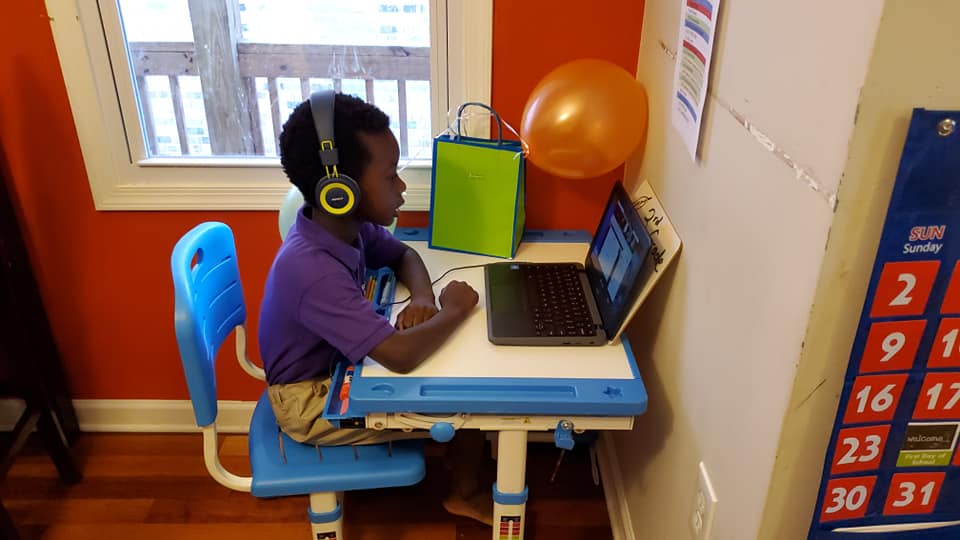
At Kairos Academies in St. Louis, students were already used to working online and at their own pace through the Summit Learning platform, but they had to adjust to doing the work without a teacher nearby. This semester, half of students are remaining completely remote while the other half are coming to campus two days a week.
The personalized learning public charter school, which serves 6th and 7th graders, has had to redesign its schedule to provide more support to students. Kairos introduced self-direction days at the start of the semester, where students were able to work independently from home.
“What we found was there was just no accountability there, and kids were just missing interactions [with their teachers and peers],” said Riley Foster, a 6th grade math teacher at Kairos. Now, teachers have increased the amount of time they spend with their students on self-direction days, including two facilitated virtual classes, a virtual group lunch with friends, and supervised work time for students who need extra support.
 3. Students may need extra guidance managing schedules and completing assignments.
Kairos Academies also increased the level of support students had from their coaches. Since the school was founded two years ago, teachers have had a group of 10 students for whom they provide one-on-one support for executive functioning tasks, such as completing assignments on time and maintaining productive study habits.
Students used to meet with their coach one or two times a week, but last spring, the frequency increased to five times a week. “Coaches could check in every day: ‘I know you’re alone at your house, let’s set some goals. Do you know how to log in?’ ” recounted Gavin Schiffres, the chief executive officer of Kairos.
Schiffres said the full-time coaching model was so successful that teachers are continuing to meet with their students more frequently, even now that students are back on campus some days. This semester, Foster said she has been meeting with her “podlings” individually for 10-15 minutes three times a week. She helps them set goals for their learning, makes sure they’re on track with their assignments and able to navigate the Summit platform, and encourages them to channel their interests into their projects.
“There are some students who really thrive working on their own, and some who struggle a bit more and lack the skillset,” she said. “If it weren’t for the coaching model, self-directed learning would not be successful. [It’s] getting them to the point where they can take control of their learning.”
4. Project-based learning is still possible when done virtually.
Project-based learning is a key tenet of personalized learning, but educators say the switch to remote, hybrid, or socially distanced instruction made it difficult to do the same kind of robust projects that students previously did in person, with no social distancing limitations.
Still, the transition sparked new learning possibilities, said Brenda Vogds, the director of the Institute for Personalized Learning, which serves school districts that are engaging in personalized learning. She has seen educators more frequently encourage students to connect with experts over video chat.
“You’re not limited to the resources in your school walls,” she said. “You now have the opportunity to reach out into the community to make connections you may not have been able to make before.”
And some schools brought projects to their students’ homes. Eesir Kaur, the senior director of humanities and professional development for the Rocketship Public Schools network, which is still providing mainly remote instruction this semester, said campuses hosted a distribution day where families picked up materials for hands-on projects. For example, students picked up markers, paint, and poster boards to create a “get out the vote” campaign for a civic engagement lesson. For an engineering lesson, students picked up popsicle sticks to build a catapult.
5. Students still need opportunities to speak up and collaborate.
Educators also have to find creative ways to foster collaboration and student talk time in this unprecedented school year. Knox, the principal of the Colorado school that has opened for full in-person instruction, said students can’t have their desks side by side or work closely with one another, in order to maintain social distancing. They might still join a Zoom meeting from the classroom or use other virtual tools to work together without being nearby.
“It just takes a couple extra steps,” Knox said. “An easy way out would be to say, ‘Nope, everyone’s going to sit there and do the same thing at the same time.’ That’s not what we believe in.”
With remote instruction, Kaur said, one initial challenge was making sure young students had enough opportunities to talk in class. Typically, they’d do “turn and talks,” a classroom practice in which the teacher poses a question or discussion topic and students turn to a peer and discuss. But breakout rooms on Zoom were cumbersome for kindergartners.
Instead, one kindergarten teacher told students to bring their favorite stuffed animal to virtual class. That stuffed animal, the teacher said, would be their study buddy. Students would be responsible for sharing their thinking with their study buddy or telling it the sound they were learning.
In other words, the stuffed animal served as a “turn and talk,” Kaur said. The concept was so successful that Rocketship has replicated this practice across the entire network for grades K-2.
“You see little Lilos and Stitches everywhere, or parrots or teddy bears,” she said. “It’s really awesome.”
6. Remember that the challenges are helping build more independent learners.
While there have been some roadblocks over the past nine months, educators say they’ve seen students grow as problem-solvers and learners.
“When we transitioned to distance learning, it emphasized the idea that you move at your own pace because you are only trying to compete against yourself, you’re only trying to be a better version of yourself,” Rocketship’s Kaur said.
Krista Purnell, a school and district success manager for Summit Learning, added: “Once the pandemic’s over, there may be something else that comes along in the world, but having those habits of resilience, self-regulation, agency … we’re helping schools build that now.”
In fact, Vogds of the Institute for Personalized Learning said this transition has forced schools to take a hard look at their instruction and make sure they’re centering it on students and their individual needs.
“Education’s future is not direct instruction, education’s future is learner-centered practice,” she said. “If we miss this opportunity, I’ll be very disappointed.”
Coverage of whole-child approaches to learning is supported in part by a grant from the Chan Zuckerberg Initiative. Education Week retains sole editorial control over the content of this coverage.
Published on Tháng mười một 17, 2020
Đọc thêm các câu chuyện về: Chưa phân loại.
Trong lớp học

3 Ways to Build Strong Parent-Teacher Connections
By Jeremiah Davis & Mrs. Aqeel, Rocketship Dream Community Prep | May 15, 2025
Ready to level up your relationships with your families this school year? Listen in for tips from an experienced teacher known for building strong bonds with parents!
Đọc thêm ⟩
Làm thế nào để nuôi dưỡng tư duy phát triển trong lớp học
| Ngày 10 tháng 4 năm 2025
Học cách nuôi dưỡng sự phản chiếu, đón nhận thử thách và thúc đẩy tính kiên trì ở bản thân bạn và học sinh của bạn.
Đọc thêm ⟩
Làm thế nào để cải thiện văn hóa trường học
Jeremiah Davis, Trợ lý chuyên môn, Rocketship Dream Community Prep | Ngày 3 tháng 3 năm 2025
Sẵn sàng nâng cao tinh thần ở trường của bạn? Hãy lồng ghép chín lễ kỷ niệm này vào năm học của bạn!
Đọc thêm ⟩
Làm thế nào để huấn luyện trong trường học cải thiện kết quả
Trường công lập Rockesthip | Ngày 4 tháng 2 năm 2025
Tìm hiểu cách huấn luyện trực tiếp và các buổi phản hồi hàng tuần có thể giúp giáo viên của bạn cảm thấy được hỗ trợ nhiều hơn trong suốt cả năm!
Đọc thêm ⟩
Lời khuyên cho giáo viên năm nhất về hội nghị phụ huynh
Jeremiah Davis, Trợ lý chuyên môn, Rocketship Dream Community Prep | Ngày 6 tháng 1 năm 2025
Bạn đang tìm kiếm mẹo hay nhất cho hội nghị phụ huynh? Hãy chuẩn bị với lời khuyên từ các nhà giáo dục của chúng tôi.
Đọc thêm ⟩
Giáo viên năm nhất? Dưới đây là năm lỗi cần tránh.
Jeremiah Davis, Trợ lý chuyên môn, Rocketship Dream Community Prep | Ngày 1 tháng 11 năm 2024
Xem những sai lầm mà hầu hết giáo viên năm nhất mắc phải và cách bạn có thể tiến bộ trong năm học này với một số mẹo đơn giản từ một đồng nghiệp giáo viên.
Đọc thêm ⟩
3 Hệ thống lớp học mà giáo viên mới thề sẽ tuân thủ
Trường công Rocketship | Ngày 30 tháng 9 năm 2024
Với tư cách là một giáo viên năm nhất, việc thiết lập một môi trường lớp học suôn sẻ và hiệu quả có thể khiến bạn cảm thấy hơi choáng ngợp. May mắn thay, những chiến lược đơn giản này có thể giúp ích rất nhiều.
Đọc thêm ⟩
Sự cộng tác giữa các giáo viên có thể mang lại lợi ích gì cho lớp học của bạn
Có sự góp mặt của Alejandra Chavez, Chuyên gia giáo dục tại Trường tiểu học Rocketship Mosaic | Ngày 10 tháng 6 năm 2024
Hãy lắng nghe cô Aly chia sẻ về cách một nhóm giáo viên nhỏ có thể tạo nên sự khác biệt lớn trong kết quả học tập của học sinh thông qua việc lập kế hoạch chu đáo, hợp tác tập trung và các điều chỉnh được cá nhân hóa. Cô Aly là một trong những giáo viên có thành tích cao nhất của chúng tôi tại California trong năm học 23-24.
Đọc thêm ⟩
Hỗ trợ phụ huynh của học sinh đa ngôn ngữ trong các cuộc họp gia đình/giáo viên
Emma Volpe, Học viện Rocketship United | Ngày 1 tháng 6 năm 2022
Nhận được thông tin chi tiết sâu sắc về cách tạo ra môi trường hội nghị gia đình - giáo viên toàn diện hơn.
Đọc thêm ⟩
5 cách để củng cố mối quan hệ trong lớp học
James Cross, Trợ lý Hiệu trưởng, Trường Tiểu học Rocketship Nashville Northeast | Ngày 20 tháng 2 năm 2022
Kỷ nguyên giáo dục mới đòi hỏi một cấp độ kết nối mới. Sau đây là một số mẹo chính để củng cố mối quan hệ trong lớp học của bạn trong năm học này.
Đọc thêm ⟩
5 cách lãnh đạo nhà trường có thể hướng dẫn và hỗ trợ giáo viên
Eesir Kaur, Giám đốc Phát triển Chuyên môn | Ngày 15 tháng 10 năm 2020
Bạn có phải là một nhà lãnh đạo trường học đang muốn hướng dẫn giáo viên của mình hiệu quả hơn không? Sau đây là những gì hiệu quả với chúng tôi.
Đọc thêm ⟩
 Tiếng Việt
  English
  Español de México