


7 Tips to Help Teachers Discuss the Political Climate with Elementary Students
By Emma Volpe, Lead English Language Specialist, Rocketship United Academy
*This post originally appeared on EducationPost.com.
“Don’t talk politics and religion at the dinner table.” I presume I’m not the only one who was brought up under this unspoken rule. With a politically-neutral immigrant father and a politically-silent mother, this taboo ‘p’ word was simply not brought up in our home. I remember the first election I was of-age to vote. I woke up early with my college housemates, drove outside of the university bubble, and cast our votes. I felt so proud but own that I had little to no idea what I was doing. By the time I reached college and the rise of social media was in full force I was flooded by what I consumed from peers or stumbled upon online by my trusted sources at the time (which were Buzzfeed and the Huffington Post).
It really hasn’t been until the last four years that I’ve tried to tackle the ‘p’ word (politics) on a personal level. Especially now in such a polarizing time, I’ve struggled to internalize my own beliefs in a calm and rational manner. Part of me still is pulled by the “don’t talk” notion of the Boomer adults who raised me while the other side is pulled by the vocal, brassy Generation Zs I see online. It’s an odd time to navigate talking ‘politics’ – particularly adding the layer of being a teacher to it.
So how do we equip the next generation to find their voice while also teaching them the value of listening with intention? How do we commission them to develop their own ideas while also being open to an ongoing empathetic dialogue?
This 2020 Election season has been an incredibly interesting time as my school has been predominantly online. There’s no playbook on how to answer students’ hard questions or how to educate them about what is happening in the world without infringing on boundaries. At the end of day, students are aware that something about this season is different than the norm. They default to observing the adults in their lives, so how can we ensure that we are modeling healthy but authentic behavior for them? How do we support the next generation so perhaps they find a way to use their voice with the utmost empathy in order to find a balance between silence and stubbornness? After asking myself many of these questions, reading, listening, and reflecting I believe I’ve collected a sense of personal pragmatisms for how to speak with students about ‘politics’ in a way that focuses on their social-emotional development.
1. Set objectives and norms.
As a best practice in teaching, I’ve been taught to always start with the “why.” Why are we learning or talking about this? What is the ultimate take away you want students to grasp? Then set norms. I’ve found success in writing them out and then giving students a space to discuss and agree upon them. This sets up the conversation to be more successful since it puts the class on the same track.
2. Build community – bring in outside speakers.
A silver lining in this time is the number of people who are now working from home. This means it might actually be more convenient for people to take time to join a Zoom or online call. Take advantage of this exciting opportunity to bring in new and diverse voices to your classroom!
3. Answer their questions.
Students have a keen radar on genuineness. They can read their teachers’ mannerisms and see right through us if we are acting out of our norm. So when students ask questions, yes even difficult ones or ones we may not know the best answer to give, they’ll notice if we dismiss it. That can send a signal to them even if it’s unintentional or subconscious. If it’s a question that may be best answered privately then ask the student to hang back to have that one on one. It’s also okay to not know an answer and share that response. Again, they read our cues so encourage them to ask questions even if they’re hard to answer. It probably means it’s a really good question!
4. Explain both sides.
A best practice in rhetoric or debate is to be ready for counter-arguments. That being said, it’s in a student’s best interest to receive perspective from both sides of a discussion – again, even when it’s hard or contrasting to your own beliefs. It’s vital to emphasize that both sides don’t always hold equal weight. It’s empathetic to listen but doesn’t mean you have to change or accept a countering opinion. Everyone can have an opinion without everyone being right.
5. Teach about credibility.
As stated in the beginning, my trusted sources during college were Buzzfeed and The Huffington Post. Now in full transparency, I still follow both of these sites but with the caveat that I recognize that I need other sources for full validity. Before going into education, my undergraduate studies were all about the societal relationship with the media. It’s complicated and tense to say the least. We rely on news and media outlets to provide us with vital information. There’s a lot of trust involved. We are all media consumers, children included, so it’s a great time for them to practice cognition around what makes a credible source and how to navigate different sources.
6. Focus on making memories.
When we look back at our own schooling experiences there are certain memories that jump out. I still remember making puppets and researching Robert Dinwiddie (a not very famous or important figure during Revolutionary War times) because our teacher made it the biggest deal. The day we presented those puppets made of orange juice cartons made me feel like a celebrity. So focus on how to create memories and experiences that students will look back on as adults and remember.
One way to do this is by hosting grade-wide elections where students run for class president. I decided to do this in tandem with the January inauguration to help students better understand the election process and see the importance of civic engagement first hand.
7. Context > Content
“I’ve learned that people will forget what you said, people will forget what you did, but people will never forget how you made them feel” – Maya Angelou
At the end of the day, students will likely not remember every statistic, fact, piece of news, policy, or person you teach them. What they will remember is the tone of the space and the level of empathy their teacher and peers used. The context of the conversation is vital. Setting up a safe space for dialogue (using an objective and norms) allows students to engage to a degree in which they feel comfortable. If they have positive experiences with the ‘p’ word, the hope is that they hold onto these tools as they get older and have full autonomy in conversations.
This school year has been unlike any other as we all traverse uncharted waters. There’s no one right way to go about it. To me, it’s a tremendously rich opportunity to trust students and create a space for them to process and ask questions. If we equip them with tools to talk about issues that may be categorized as “not having a place at the dinner table,” then we use this time to build their voices and empathy simultaneously. There’s a chance to shift the norms and narrative where students can rewrite their generation. They will do that out of their own resilience, either way, so let’s empower them with the social-emotional tools to be the most effective, empathetic, and engaging generation yet!
Published on Tháng Một 25, 2020
Đọc thêm các câu chuyện về: Chưa phân loại.
Trong lớp học

3 Ways to Build Strong Parent-Teacher Connections
By Jeremiah Davis & Mrs. Aqeel, Rocketship Dream Community Prep | May 15, 2025
Ready to level up your relationships with your families this school year? Listen in for tips from an experienced teacher known for building strong bonds with parents!
Đọc thêm ⟩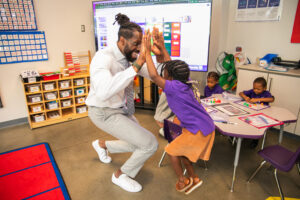
Làm thế nào để nuôi dưỡng tư duy phát triển trong lớp học
| Ngày 10 tháng 4 năm 2025
Học cách nuôi dưỡng sự phản chiếu, đón nhận thử thách và thúc đẩy tính kiên trì ở bản thân bạn và học sinh của bạn.
Đọc thêm ⟩
Làm thế nào để cải thiện văn hóa trường học
Jeremiah Davis, Trợ lý chuyên môn, Rocketship Dream Community Prep | Ngày 3 tháng 3 năm 2025
Sẵn sàng nâng cao tinh thần ở trường của bạn? Hãy lồng ghép chín lễ kỷ niệm này vào năm học của bạn!
Đọc thêm ⟩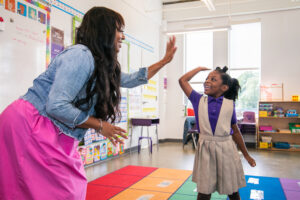
Làm thế nào để huấn luyện trong trường học cải thiện kết quả
Trường công lập Rockesthip | Ngày 4 tháng 2 năm 2025
Tìm hiểu cách huấn luyện trực tiếp và các buổi phản hồi hàng tuần có thể giúp giáo viên của bạn cảm thấy được hỗ trợ nhiều hơn trong suốt cả năm!
Đọc thêm ⟩
Lời khuyên cho giáo viên năm nhất về hội nghị phụ huynh
Jeremiah Davis, Trợ lý chuyên môn, Rocketship Dream Community Prep | Ngày 6 tháng 1 năm 2025
Bạn đang tìm kiếm mẹo hay nhất cho hội nghị phụ huynh? Hãy chuẩn bị với lời khuyên từ các nhà giáo dục của chúng tôi.
Đọc thêm ⟩
Giáo viên năm nhất? Dưới đây là năm lỗi cần tránh.
Jeremiah Davis, Trợ lý chuyên môn, Rocketship Dream Community Prep | Ngày 1 tháng 11 năm 2024
Xem những sai lầm mà hầu hết giáo viên năm nhất mắc phải và cách bạn có thể tiến bộ trong năm học này với một số mẹo đơn giản từ một đồng nghiệp giáo viên.
Đọc thêm ⟩
3 Hệ thống lớp học mà giáo viên mới thề sẽ tuân thủ
Trường công Rocketship | Ngày 30 tháng 9 năm 2024
Với tư cách là một giáo viên năm nhất, việc thiết lập một môi trường lớp học suôn sẻ và hiệu quả có thể khiến bạn cảm thấy hơi choáng ngợp. May mắn thay, những chiến lược đơn giản này có thể giúp ích rất nhiều.
Đọc thêm ⟩
Sự cộng tác giữa các giáo viên có thể mang lại lợi ích gì cho lớp học của bạn
Có sự góp mặt của Alejandra Chavez, Chuyên gia giáo dục tại Trường tiểu học Rocketship Mosaic | Ngày 10 tháng 6 năm 2024
Hãy lắng nghe cô Aly chia sẻ về cách một nhóm giáo viên nhỏ có thể tạo nên sự khác biệt lớn trong kết quả học tập của học sinh thông qua việc lập kế hoạch chu đáo, hợp tác tập trung và các điều chỉnh được cá nhân hóa. Cô Aly là một trong những giáo viên có thành tích cao nhất của chúng tôi tại California trong năm học 23-24.
Đọc thêm ⟩
Hỗ trợ phụ huynh của học sinh đa ngôn ngữ trong các cuộc họp gia đình/giáo viên
Emma Volpe, Học viện Rocketship United | Ngày 1 tháng 6 năm 2022
Nhận được thông tin chi tiết sâu sắc về cách tạo ra môi trường hội nghị gia đình - giáo viên toàn diện hơn.
Đọc thêm ⟩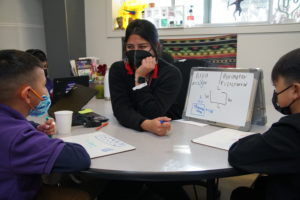
5 cách để củng cố mối quan hệ trong lớp học
James Cross, Trợ lý Hiệu trưởng, Trường Tiểu học Rocketship Nashville Northeast | Ngày 20 tháng 2 năm 2022
Kỷ nguyên giáo dục mới đòi hỏi một cấp độ kết nối mới. Sau đây là một số mẹo chính để củng cố mối quan hệ trong lớp học của bạn trong năm học này.
Đọc thêm ⟩
5 cách lãnh đạo nhà trường có thể hướng dẫn và hỗ trợ giáo viên
Eesir Kaur, Giám đốc Phát triển Chuyên môn | Ngày 15 tháng 10 năm 2020
Bạn có phải là một nhà lãnh đạo trường học đang muốn hướng dẫn giáo viên của mình hiệu quả hơn không? Sau đây là những gì hiệu quả với chúng tôi.
Đọc thêm ⟩
 Tiếng Việt
  English
  Español de México