

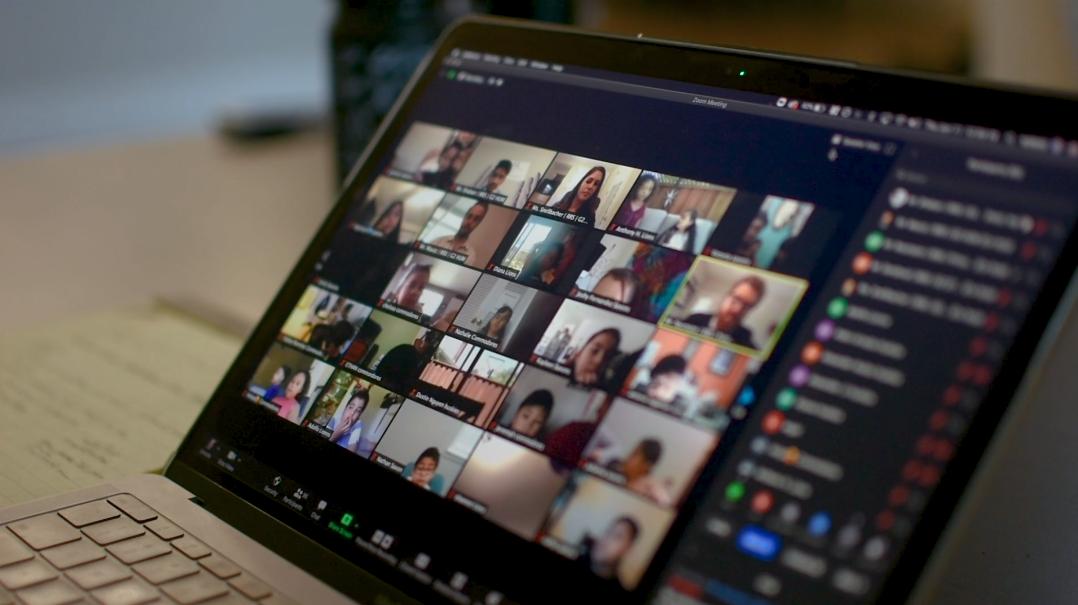
How I Taught My Elementary Class About Digital Literacy During Distance Learning
By Waleed Shaban, Integrated Special Education Teacher, Rocketship Rising Stars
I still recall walking into my first marketing class 7 years ago. Before introducing herself, our professor played a 45-second BMW commercial. For the next 30 minutes, we analyzed every aspect of the ad. We looked at colors chosen and dialogue spoken and the choice of music included. We examined how each and every aspect was intentionally chosen to persuade us to feel more positively about that car. Advertisements and digital content aimed at children are no different. I’ve had multiple conversations with families explaining that, no, you don’t have to spend money on Fortnite or Roblox (free, popular video games) in order to gain a competitive advantage. However, students see famous streamers and YouTubers marketing cosmetic items and neat emotes that make it seem like we have to have the latest thing. It is appalling how the digital world sways to make decisions in our everyday lives, yet it’s a reality we can help our students be better prepared for.
This virtual school year, our students interact with more media than ever before. Students are now logged on devices for 6+ hours per day for school. Game and social media companies gear vast amounts of content towards children on a daily basis, so even when students aren’t learning in a school environment, many still love to be in front of their screens. All that time leads to endless opportunities to soak up content.
It felt critical to make sure my students understood the way our digital world works. My students have engaged in physical, real-life classroom communities in the past. They knew the typical recess rules. Now, the rules might not apply the same way. Recess could now mean students stealing a quick game of Fortnite while lunch is prepared by a family member. It could mean calling a cousin or friend via FaceTime. And all of this happens while teachers are away, tending to their own matters.
While I can’t control what happens outside my classroom, I wanted to make sure my students walked away from our lesson with these 3 major ideas in their heads as I guided them through a social-emotional lesson on digital literacy.
[Check out my SEL digital literacy lesson here to help create your own!]
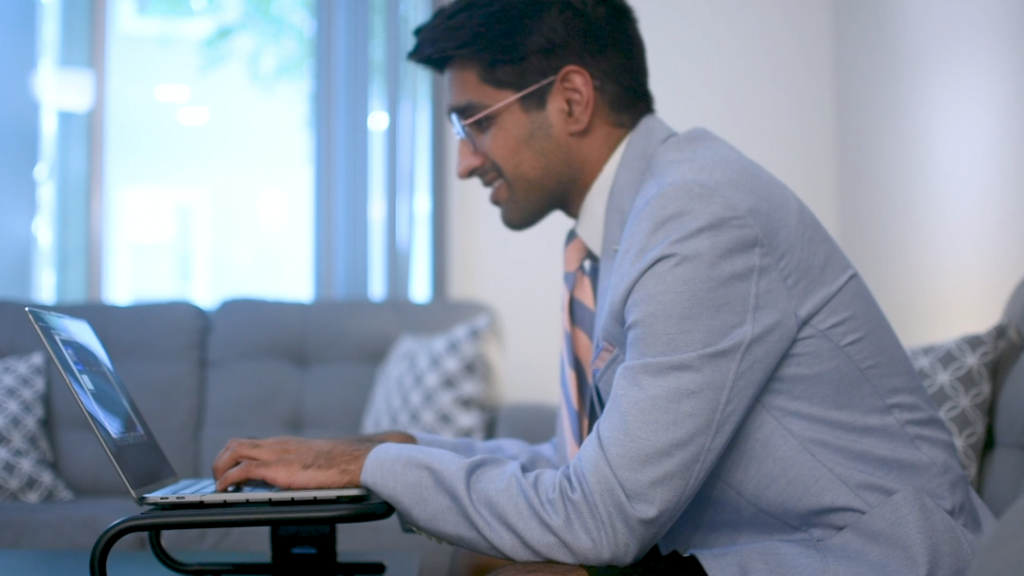
1. We are still a community, even when we’re miles apart from one another.
Our discussion began with trying to define the word “community.” We knew a community consisted of a group of people. The question was, could we still be a community even when we weren’t in the same geographic area? I saw students’ shaking their heads “no.” Seeing that response reminded me how important this lesson was.
2. The content we share has power and impacts others.
Our class then read a story of a young girl who posted an anonymous insult on a friend’s Instagram account. The girl in the story didn’t realize the impact she would have. She didn’t think about what would happen when her friend read the phrase, “what a bunch of ugly freaks” on her post. The girl said she meant it as a joke. That didn’t matter. Across the Zoom grid, there were wide eyes and mouths agape. How could someone say that? This immediately led to a discussion of the power of words – on how our words either create or harm our community.
On the internet, words have the potential to live forever. They can travel without any responsibility taken by their owner. They can damage their targets. My students in third grade aren’t active on Instagram, but they are on other platforms such as TikTok, Roblox, and Minecraft. These communities have similar features where people can voice their opinions.
3. We must be wary of what others share with us and how it impacts us.
I taught my students that when we receive a message that is negative in nature, we need to stop what we’re doing in the moment. This is the first step. Afterward, we must think about if it’s actually true. Does the person mean that, and would they say it to your face? Do you believe that about yourself? Why would the person say that – are they trying to feel better about themselves?
As we saw how what we can say has the potential to hurt others, we spent time reflecting on our own experiences online. It’s funny to call our 8 and 9-year old students “veterans” in the virtual world, but they are. Even pre-pandemic, they have engaged in a lifestyle of communication unlike generations prior. We shared (private messages in the chat to the teacher) if we had ever felt hurt by a message. The result was astounding. It’s easy to forget about the sheer amount of touchpoints students make with others online. After the school day, batteries drain on iPads playing Roblox, making FaceTime calls, and much more. With that amount of interactions, negative messages are bound to come up.
At first, I was hesitant to deliver such a personal lesson when I actually couldn’t sit or stand close to my students. As a teacher, it can feel quite difficult to engage students in virtual content. When we had a chance to discuss digital community, messages, and its impact on us, the floodgates opened up. Our chat felt more alive than it ever had. I heard from students who usually took full advantage of the Zoom “mute” feature. Why is that? Discussing our role in our community is personal. It’s important to every student. It’s refreshing in an online classroom.
This lesson led to more discussions in the coming weeks. We discussed how advertisers make us feel, which apps were safe to use, and how we could use the chat feature to empower others. A topic like this helped us connect with families on a deeper level, as well. In our check=ins, we were able to talk about more than merely data points on the latest assessment.
I don’t know if my students will work in digital advertising or marketing in the decades to come. Yet, you don’t need to work in or study the industry to realize its impact on our everyday lives. A 45-second car commercial has the power to influence our thinking and sway our decisions. A comment on an Instagram post has the same, if not more, power. It’s time to make sure our students understand that power.
Published on Tháng ba 22, 2021
Đọc thêm các câu chuyện về: Chưa phân loại.
Trong lớp học

3 Ways to Build Strong Parent-Teacher Connections
By Jeremiah Davis & Mrs. Aqeel, Rocketship Dream Community Prep | May 15, 2025
Ready to level up your relationships with your families this school year? Listen in for tips from an experienced teacher known for building strong bonds with parents!
Đọc thêm ⟩
Làm thế nào để nuôi dưỡng tư duy phát triển trong lớp học
| Ngày 10 tháng 4 năm 2025
Học cách nuôi dưỡng sự phản chiếu, đón nhận thử thách và thúc đẩy tính kiên trì ở bản thân bạn và học sinh của bạn.
Đọc thêm ⟩
Làm thế nào để cải thiện văn hóa trường học
Jeremiah Davis, Trợ lý chuyên môn, Rocketship Dream Community Prep | Ngày 3 tháng 3 năm 2025
Sẵn sàng nâng cao tinh thần ở trường của bạn? Hãy lồng ghép chín lễ kỷ niệm này vào năm học của bạn!
Đọc thêm ⟩
Làm thế nào để huấn luyện trong trường học cải thiện kết quả
Trường công lập Rockesthip | Ngày 4 tháng 2 năm 2025
Tìm hiểu cách huấn luyện trực tiếp và các buổi phản hồi hàng tuần có thể giúp giáo viên của bạn cảm thấy được hỗ trợ nhiều hơn trong suốt cả năm!
Đọc thêm ⟩
Lời khuyên cho giáo viên năm nhất về hội nghị phụ huynh
Jeremiah Davis, Trợ lý chuyên môn, Rocketship Dream Community Prep | Ngày 6 tháng 1 năm 2025
Bạn đang tìm kiếm mẹo hay nhất cho hội nghị phụ huynh? Hãy chuẩn bị với lời khuyên từ các nhà giáo dục của chúng tôi.
Đọc thêm ⟩
Giáo viên năm nhất? Dưới đây là năm lỗi cần tránh.
Jeremiah Davis, Trợ lý chuyên môn, Rocketship Dream Community Prep | Ngày 1 tháng 11 năm 2024
Xem những sai lầm mà hầu hết giáo viên năm nhất mắc phải và cách bạn có thể tiến bộ trong năm học này với một số mẹo đơn giản từ một đồng nghiệp giáo viên.
Đọc thêm ⟩
3 Hệ thống lớp học mà giáo viên mới thề sẽ tuân thủ
Trường công Rocketship | Ngày 30 tháng 9 năm 2024
Với tư cách là một giáo viên năm nhất, việc thiết lập một môi trường lớp học suôn sẻ và hiệu quả có thể khiến bạn cảm thấy hơi choáng ngợp. May mắn thay, những chiến lược đơn giản này có thể giúp ích rất nhiều.
Đọc thêm ⟩
Sự cộng tác giữa các giáo viên có thể mang lại lợi ích gì cho lớp học của bạn
Có sự góp mặt của Alejandra Chavez, Chuyên gia giáo dục tại Trường tiểu học Rocketship Mosaic | Ngày 10 tháng 6 năm 2024
Hãy lắng nghe cô Aly chia sẻ về cách một nhóm giáo viên nhỏ có thể tạo nên sự khác biệt lớn trong kết quả học tập của học sinh thông qua việc lập kế hoạch chu đáo, hợp tác tập trung và các điều chỉnh được cá nhân hóa. Cô Aly là một trong những giáo viên có thành tích cao nhất của chúng tôi tại California trong năm học 23-24.
Đọc thêm ⟩
Hỗ trợ phụ huynh của học sinh đa ngôn ngữ trong các cuộc họp gia đình/giáo viên
Emma Volpe, Học viện Rocketship United | Ngày 1 tháng 6 năm 2022
Nhận được thông tin chi tiết sâu sắc về cách tạo ra môi trường hội nghị gia đình - giáo viên toàn diện hơn.
Đọc thêm ⟩
5 cách để củng cố mối quan hệ trong lớp học
James Cross, Trợ lý Hiệu trưởng, Trường Tiểu học Rocketship Nashville Northeast | Ngày 20 tháng 2 năm 2022
Kỷ nguyên giáo dục mới đòi hỏi một cấp độ kết nối mới. Sau đây là một số mẹo chính để củng cố mối quan hệ trong lớp học của bạn trong năm học này.
Đọc thêm ⟩
5 cách lãnh đạo nhà trường có thể hướng dẫn và hỗ trợ giáo viên
Eesir Kaur, Giám đốc Phát triển Chuyên môn | Ngày 15 tháng 10 năm 2020
Bạn có phải là một nhà lãnh đạo trường học đang muốn hướng dẫn giáo viên của mình hiệu quả hơn không? Sau đây là những gì hiệu quả với chúng tôi.
Đọc thêm ⟩
 Tiếng Việt
  English
  Español de México