

5 formas en que los directores de centro pueden orientar y apoyar a los profesores
By Kane Koller, Manager of Professional Development
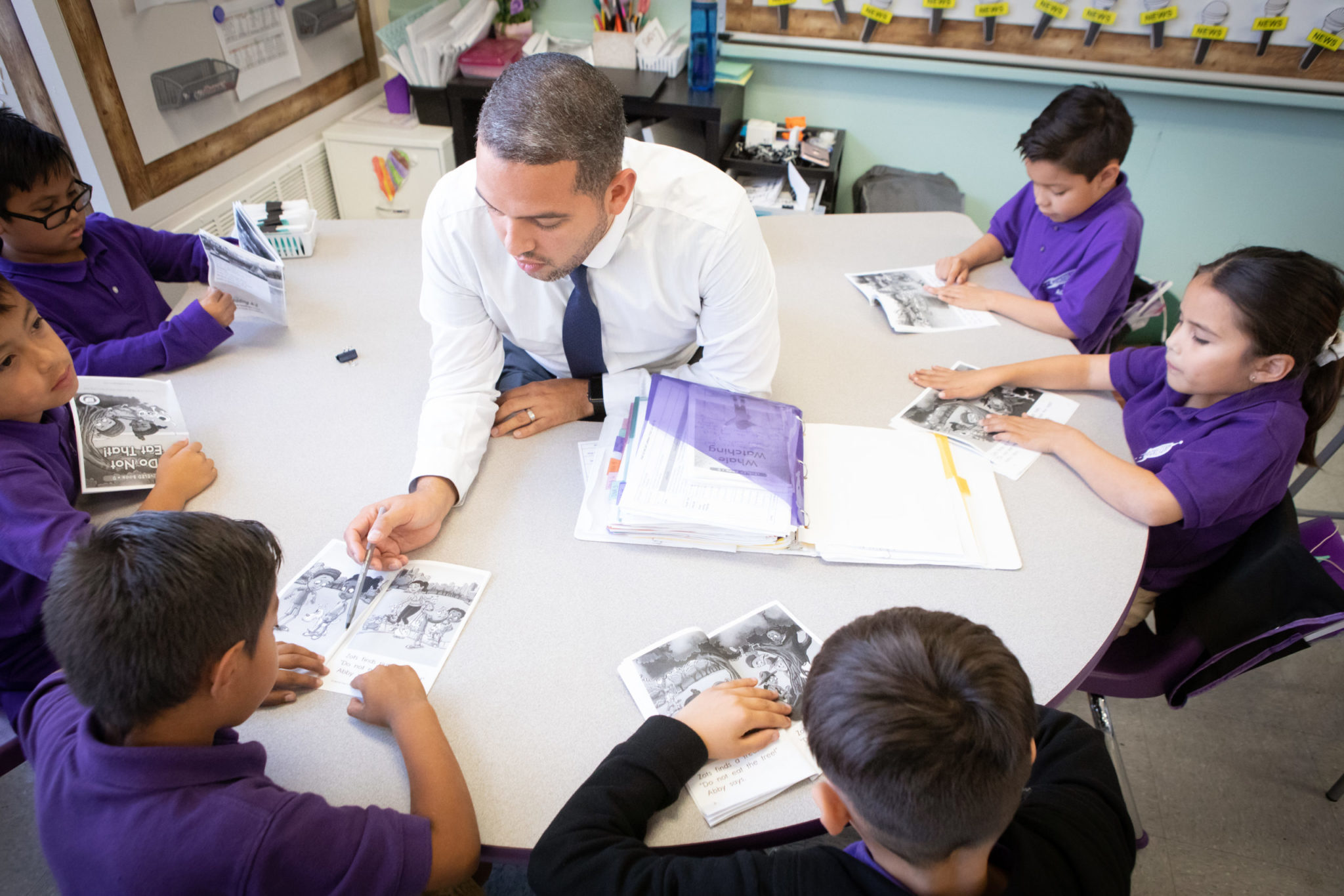
Whether you’re new to the classroom or looking to take your skills to the next level, teachers greatly benefit from consistent, professional coaching. Having a 1:1 teacher-coach relationship helps teachers learn new skills, set and reach goals and be fully prepared for lessons ahead. It also ensures teachers have support to troubleshoot areas of concern and build their ability to analyze student data so the class stays on track and struggling students are supported.
As a non-profit charter network heavily focused on professional development, we generally recommend coaches observe and provide written feedback, deliver in-the-moment feedback (i.e. speaking into an earpiece the teacher wears during instruction), model instruction, and engage in co-observations with the teacher by watching videos or observing an exemplar teacher. We’ve also found it’s important to carve out ample time for weekly professional development, which is why we recommend coaches provide at least four hours of support each week to each teacher. For comprehensive support, teachers can be observed at least twice a week, receive at least two hours of professional development per week and have a weekly one-on-one meeting with their coaches to help unleash their potential so their students can reach their own.
Amidst our coaching, we’ve found the following are critical for a successful teacher-coach relationship and hope they help you become a strong school leader.
1. Build trust and strong relationships with each other.
Before you begin coaching, get to know your teachers as people. What drew them to education and this particular school? What inspires them? What they’re nervous about? Take time during each session to build your relationship authentically, so you understand how to best support them when challenging times arise.
2. Host 1:1 meetings each week.
This regular cadence gives coaches the opportunity to troubleshoot any issues that surface in the classroom, role play lessons for the upcoming week, and review how the teacher is growing and meeting their goals. This is also a great space to set new goals. You may want to find additional time to accomplish these goals aside from your 1:1.
3. Collaboratively prepare for units in advance.
Designed curriculums help educators build foundational skills by focusing on how to effectively deliver lessons and manage a classroom with an educational strategy that’s proven to help students excel. As a coach, you’ll provide your teachers with unit plans, scope and sequences, and daily exemplar lesson plans so they can see what success looks like. However, there’s still plenty of work to be done by the teacher on their own.
We recommend coaches and teachers meet for about 90 minutes two weeks in advance of a new unit to collaboratively create a strategy. This time ensures teachers and coaches are prepared with a deep understanding of the unit’s content and are equipped with strategies to teach conceptually. They’ll also form a mutual understanding of the bar set by the unit assessment, what students will need to be successful, and what the bottom lines of the lessons are. Together, they’ll also plan for modifications that may be required to meet the strengths and needs of their students.
4. Review lesson plans each week.
Have teachers submit lesson plans they’d like reviewed a week in advance. In your one to one meeting, coaches should provide constructive feedback for any adjustments needed. Some typical things to hone in on are alignment, rigor, and differentiation, which are critical components to any strong lessons. Let’s break this down a bit. In alignment, honing in on how the lesson activities match up with the objectives is key. In terms of rigor, ask yourself if students are doing an appropriate amount of cognitive work and ensuring that work is “high-level.” In the context of differentiation, take time to examine how English learners, those with specialized needs, or advanced students have opportunities to both receive adequate learning supports and demonstrate their mastery. After you review the lesson, practice it, or focus on any specific part the teacher isn’t feeling completely confident about.
5. Role-play lessons.
Whether you’re preparing for an entire unit or an individual lesson, role-playing helps teachers build and practice skills in a comfortable, constructive environment. As a coach some key things to keep in mind while conducting role-playing are:
-Time Your Role Play: Not only do you want to be efficient when practicing, but you want to be aware of your economical use of language. Have a set time limit with your partner.
-Hone In On the Skill: You want to try to isolate the skill or part of the lesson you feel least confident about. Guide your partner(s) to align their feedback around that.
-Practice Multiple Times: The old adage about “practice makes perfect” is true, but don’t just get it right once. Practice “until you can’t get it wrong” instead. That increases both your confidence and your ability to perform when you’re actually doing it.
Implement Feedback In The Moment: Similarly to the above, don’t just do it once and receive feedback. Do it again and implement the feedback in the moment, so it sticks.
With a combination of thoughtful planning, relationship building, and careful review, school leaders can truly accelerate the skill set of their teachers and the power and effectiveness of their coaching meetings.
While these have been effective modalities for Rocketship, these are just some of the many things school leaders should keep in mind while helping teachers grow. We’re constantly looking for ways to improve our professional development practices. As we discover new, effective ways we’ll be sure to share those here with you.
Published on septiembre 26, 2020
Lea más historias sobre: Sin categoría.
En el aula

3 Ways to Build Strong Parent-Teacher Connections
By Jeremiah Davis & Mrs. Aqeel, Rocketship Dream Community Prep | May 15, 2025
Ready to level up your relationships with your families this school year? Listen in for tips from an experienced teacher known for building strong bonds with parents!
Leer más ⟩
Cómo fomentar una mentalidad de crecimiento en el aula
| 10 de abril de 2025
Aprenda a cultivar la reflexión, aceptar los retos y fomentar la perseverancia en usted mismo y en sus alumnos.
Leer más ⟩
Cómo mejorar la cultura escolar
Jeremiah Davis, Paraprofesional, Rocketship Dream Community Prep | 3 de marzo de 2025
¿Listo para elevar la moral en tu colegio? Incorpore estas nueve celebraciones a su curso escolar.
Leer más ⟩
Cómo el coaching en las escuelas mejora los resultados
Escuelas Públicas de Rockesthip | Feb 4, 2025
Descubra cómo el coaching en directo y las sesiones semanales de feedback pueden ayudar a sus profesores a sentirse más respaldados durante todo el año.
Leer más ⟩
Conferencia de padres: consejos para profesores noveles
Jeremiah Davis, Paraprofesional, Rocketship Dream Community Prep | 6 de enero de 2025
¿Busca consejos para la conferencia de padres? Prepárese con los consejos de nuestros educadores.
Leer más ⟩
¿Primer año como profesor? Aquí tienes cinco errores que debes evitar.
Jeremiah Davis, Paraprofesional, Rocketship Dream Community Prep | 1 de noviembre de 2024
Descubre qué errores comete la mayoría de los profesores primerizos y cómo puedes salir adelante este curso escolar con algunos sencillos consejos de un colega educador.
Leer más ⟩
3 sistemas de aula por los que juran los nuevos profesores
Escuelas Públicas Rocketship | 30 de septiembre de 2024
Como profesor primerizo, establecer un entorno de clase fluido y productivo puede resultar un poco abrumador. Por suerte, estas sencillas estrategias pueden ayudar mucho.
Leer más ⟩
Cómo la colaboración entre profesores puede beneficiar a su clase
Presentación de Alejandra Chávez, especialista en educación de la escuela primaria Rocketship Mosaic | 10 de junio de 2024
Escuche a la Sra. Aly hablar de cómo un pequeño equipo de educadores puede marcar una gran diferencia en los resultados de los estudiantes mediante una planificación cuidadosa, una colaboración centrada y adaptaciones personalizadas. La Sra. Aly fue una de nuestras educadoras con mejores resultados en California en el curso 23-24.
Leer más ⟩
Apoyo a los padres de alumnos multilingües en las reuniones familia-profesor
Emma Volpe, Academia Rocketship United | 1 de junio de 2022
Obtenga reflexiones sobre cómo crear un entorno más integrador para las reuniones entre familias y profesores.
Leer más ⟩
5 maneras de fortalecer las relaciones en el aula
James Cross, Subdirector, Rocketship Nashville Northeast Elementary | 20 de febrero de 2022
La nueva era de la educación exige un nuevo nivel de conexión. Aquí tienes algunos consejos clave para fortalecer las relaciones en tu aula este curso escolar.
Leer más ⟩
5 formas en que los directores de centro pueden orientar y apoyar a los profesores
Eesir Kaur, Directora de Desarrollo Profesional | 15 de octubre de 2020
¿Es usted el director de un centro de enseñanza y quiere formar a sus profesores de forma más eficaz? Esto es lo que nos funciona a nosotros.
Leer más ⟩
 Español de México
  English
  Tiếng Việt