

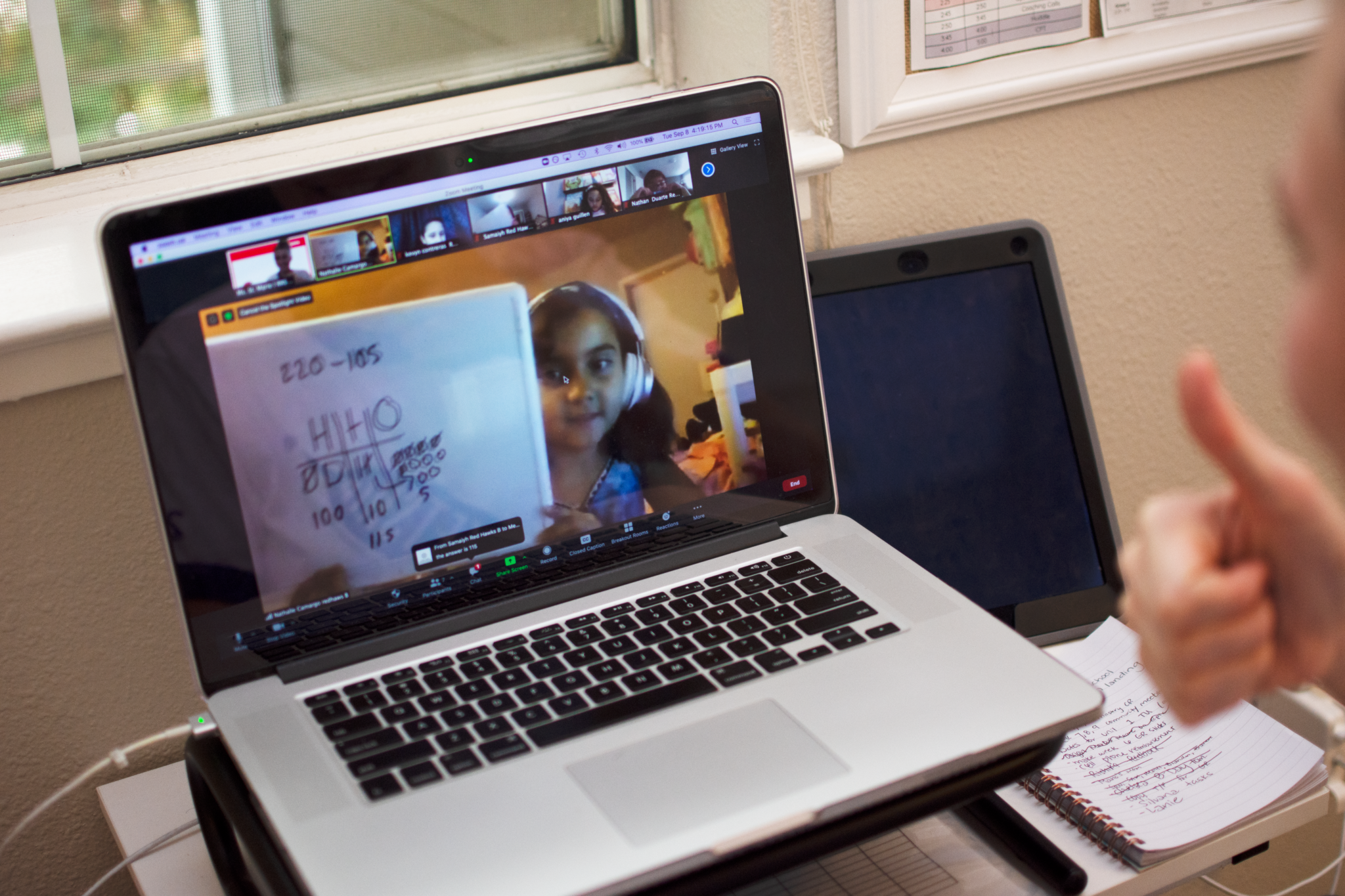
How to Boost Engagement in Virtual Classrooms with Zoom Chat & Breakout Rooms
James Cross, 4th Grade Teacher, Rocketship Nashville Northeast Elementary
Picture this- you show up to your first virtual class of the day, let all your students in from the waiting room, anxiously start your lesson, and are ready to blow student learning out of the virtual park. You spent hours researching and crafting every intricate detail of that lesson. You sweated all the small stuff and just knew it would be a 5 on the evaluation rubric. But as soon as you pose your first check for understanding, you are greeted with a sea of blank cameras and mute buttons on lock. You know that in-person your kids would eat this lesson up, but virtually something just isn’t connecting. What do you do?
The best advice that I can give you is that great teaching will always be great teaching. The techniques and strategies that you hold dear in the classroom can be adapted to work in a virtual setting. We utilize two staple engagement strategies to help spark student investment in learning. You can never go wrong with everybody talks and everybody writes.
Everybody Talks:
As teachers, we exhaust a lot of energy in trying to monitor student talking. The truth is that kids love to talk. But they also have a way of communicating that helps their classmates better understand the topic at hand. Your students are always going to be their peer’s best teacher. So, let’s get them talking!
The ‘Everybody Talks’ approach gives our students an opportunity to share their thoughts with each other. In a traditional classroom, we might call this a turn and talk. The teacher presents some information and then the students have a moment to turn and talk to a neighbor about their learning. And this can 100% happen in a virtual space! After all, this is what breakout rooms were created for.
1. When it’s time to release students to a turn and talk, put them in a breakout room with 1-2 other students. I know, this sounds scary. There will, inevitably, be way more breakout rooms than teachers, but I promise it’ll be great.
2. Make sure students are clear on what they should be discussing. Have them join their space, and let them talk! This gives you, the teacher, ample time to pop in on a few spaces to check-in on their conversation.
3. If students aren’t talking- get them started. Remind them of the prompt and wait for the discussion to start. If students are talking- let them talk! Become a listener and leave them with something to push their conversation.
4. When time is up, bring all the students back and cold call on a few groups to share. I’d suggest at least one group you listened in on that can drive the whole group discussion. Then, call on one group you didn’t get to see to ensure they had a fruitful conversation. You’d be surprised at how many students are eager to build on or share their opinion now.
Remember, speaking out loud in front of the larger class is outside of some of our kids’ level of comfort. Holding our students to high-expectations calls for no opt-out, but when we have the opportunity to make our task work for all kids, we always should.
Integrate opportunities for Everybody Talks when creating your daily lesson, but also keep it in your toolkit in case you see a dip in engagement.
Everybody Writes:
Teaching our kids to write is tough. Teaching isn’t easy, but teaching writing can be a whole different ballpark of hard. Add in the struggles of virtual teaching and writing might be the first thing off your priority list. But I’m here with some good news – the chat feature was invented for teachers to get their students writing!
‘Everybody Writes’ is one of those strategies that should be used in every class. We strive to help our kids reach a point where they are participating in a rich conversation about every topic, every day. This is the dream! And in order to make this come to life, we have to set our students up for success.
1. Before we call on students to respond to a question or prompt, we need to give them an opportunity to write. All kids take a moment to collect their thoughts and write them down. This strategy ensures that all kids have an opportunity to equally prepare to participate in the discussion. All you have to do is pose the question and put the chat box to use.
2. Students write their thoughts in the chat as a space to share them with the class and their teacher. The teacher can then read the responses and select who they would like to share and start the discussion. You can also have them send a direct message to you, the teacher, instead if you want to wait on the whole class seeing their response. Students could also write their thoughts on paper at home, but the chat allows you to monitor their writing in the moment. The method is up to you, but the goal is to get our students writing and processing what they are learning.
4. Stick to your teacher wait time and give ALL kids an opportunity to prepare for the discussion. Our students all hold unique strengths and areas to grow. This means that some kids will inevitably write their thoughts faster.
‘Everybody Talks’ and ‘Everybody Writes’ are essential engagement strategies when in-person teaching. With a little planning, and commitment to making it work virtually, they can become the go to in your virtual class, as well!
Published on noviembre 3, 2020
Lea más historias sobre: Sin categoría.
En el aula

3 Ways to Build Strong Parent-Teacher Connections
By Jeremiah Davis & Mrs. Aqeel, Rocketship Dream Community Prep | May 15, 2025
Ready to level up your relationships with your families this school year? Listen in for tips from an experienced teacher known for building strong bonds with parents!
Leer más ⟩
Cómo fomentar una mentalidad de crecimiento en el aula
| 10 de abril de 2025
Aprenda a cultivar la reflexión, aceptar los retos y fomentar la perseverancia en usted mismo y en sus alumnos.
Leer más ⟩
Cómo mejorar la cultura escolar
Jeremiah Davis, Paraprofesional, Rocketship Dream Community Prep | 3 de marzo de 2025
¿Listo para elevar la moral en tu colegio? Incorpore estas nueve celebraciones a su curso escolar.
Leer más ⟩
Cómo el coaching en las escuelas mejora los resultados
Escuelas Públicas de Rockesthip | Feb 4, 2025
Descubra cómo el coaching en directo y las sesiones semanales de feedback pueden ayudar a sus profesores a sentirse más respaldados durante todo el año.
Leer más ⟩
Conferencia de padres: consejos para profesores noveles
Jeremiah Davis, Paraprofesional, Rocketship Dream Community Prep | 6 de enero de 2025
¿Busca consejos para la conferencia de padres? Prepárese con los consejos de nuestros educadores.
Leer más ⟩
¿Primer año como profesor? Aquí tienes cinco errores que debes evitar.
Jeremiah Davis, Paraprofesional, Rocketship Dream Community Prep | 1 de noviembre de 2024
Descubre qué errores comete la mayoría de los profesores primerizos y cómo puedes salir adelante este curso escolar con algunos sencillos consejos de un colega educador.
Leer más ⟩
3 sistemas de aula por los que juran los nuevos profesores
Escuelas Públicas Rocketship | 30 de septiembre de 2024
Como profesor primerizo, establecer un entorno de clase fluido y productivo puede resultar un poco abrumador. Por suerte, estas sencillas estrategias pueden ayudar mucho.
Leer más ⟩
Cómo la colaboración entre profesores puede beneficiar a su clase
Presentación de Alejandra Chávez, especialista en educación de la escuela primaria Rocketship Mosaic | 10 de junio de 2024
Escuche a la Sra. Aly hablar de cómo un pequeño equipo de educadores puede marcar una gran diferencia en los resultados de los estudiantes mediante una planificación cuidadosa, una colaboración centrada y adaptaciones personalizadas. La Sra. Aly fue una de nuestras educadoras con mejores resultados en California en el curso 23-24.
Leer más ⟩
Apoyo a los padres de alumnos multilingües en las reuniones familia-profesor
Emma Volpe, Academia Rocketship United | 1 de junio de 2022
Obtenga reflexiones sobre cómo crear un entorno más integrador para las reuniones entre familias y profesores.
Leer más ⟩
5 maneras de fortalecer las relaciones en el aula
James Cross, Subdirector, Rocketship Nashville Northeast Elementary | 20 de febrero de 2022
La nueva era de la educación exige un nuevo nivel de conexión. Aquí tienes algunos consejos clave para fortalecer las relaciones en tu aula este curso escolar.
Leer más ⟩
5 formas en que los directores de centro pueden orientar y apoyar a los profesores
Eesir Kaur, Directora de Desarrollo Profesional | 15 de octubre de 2020
¿Es usted el director de un centro de enseñanza y quiere formar a sus profesores de forma más eficaz? Esto es lo que nos funciona a nosotros.
Leer más ⟩
 Español de México
  English
  Tiếng Việt